
Puppy Outside the Home
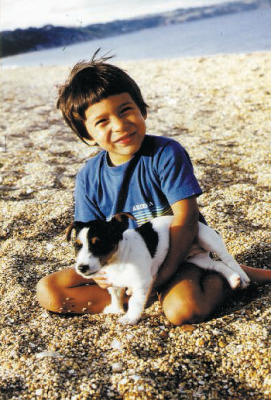
Once your puppy has received the proper vaccinations, it’s time to explore and enjoy the great outdoors and to continue socialization in puppy classes, dog parks and dog walks. Make sure to incorporate training into all of your puppy’s favorite activities; train your puppy on walks, in the car and in the park.
The most urgent priority is to continue socializing your puppy to a wide variety of experiences and people, especially children, men, and strangers. Well-socialized puppies grow up to be wonderful companions, whereas antisocial dogs are difficult, time-consuming, and potentially dangerous. Your puppy needs to learn to enjoy the company of all people and to enjoy being handled by all people, especially children and strangers.
The most important priority is that your puppy learns to perfect reliable bite inhibition and develops a soft mouth before he is eighteen weeks old. Whenever a dog bites a person or fights with another dog, the seriousness of the problem depends on the seriousness of the injury. Hence, the ease and success of retraining depends almost entirely on the dog's degree of bite inhibition. The reliability of your dog's bite inhibition determines whether you have a minor problem which may be easily corrected with a few safe, basic training exercises, or whether you have a serious and potentially dangerous problem which is going to be extremely difficult to resolve.
In a perfect world, you will successfully socialize your puppy so that he thoroughly enjoys the company and actions of all people, all dogs, and all animals. More realistically, though, accidents happen. Someone accidentally shuts the dog's tail in the car door. Someone runs to answer the telephone and accidentally treads on a sleeping dog's leg. A child runs and trips and falls on top of the dog while he is gnawing on a bone. When dogs are hurt or startled, their natural response is to snap, lunge, and even bite. Even wonderfully friendly dogs may feel inclined to protect or defend themselves when picked on by other dogs and people.
For example, when hurt or frightened a dog may snap and lunge at a person. But if a dog has well-established bite inhibition it is unlikely his teeth will even touch the skin. Or if there is skin contact, it is unlikely that the teeth will break the skin. The dog has caused no damage. On the other hand, if the dog has inadequate bite inhibition and his teeth puncture the skin, then you have a serious situation which may be difficult and time-consuming to resolve.
Similarly, dogs with well-established bite inhibition never cause damage when fighting with other dogs. The problem is minor because your dog is simply squabbling in a socially acceptable manner. On the other hand, if your dog ever hurts another dog or another animal, you have a major problem and resolution is unlikely.
Bite inhibition must be established in puppyhood, before eighteen weeks of age, since it is difficult to instill bite inhibition in an adolescent or adult dog. Learning the skills and techniques to ensure your puppy develops a reliable bite inhibition and an ultra-soft mouth is the primary reason for you to attend off-leash puppy classes. Your puppy needs to play with other puppies. Playing with adult dogs at home or in the park is simply not sufficient.
The most enjoyable priority of dog ownership is to accustom your well-socialized, soft-mouthed puppy to the world at large and prevent the development of predictable adolescent problems, thus assuring that he remains well-socialized and soft-mouthed. Remember, your dog will only remain sociable if he continues meeting and greeting unfamiliar people and unfamiliar dogs every day. Meeting the same people and dogs over and over is not sufficient. You want your dog to practice the art of meeting and getting along with strangers, not simply getting along with old friends. Consequently, regular walks with your dog are as essential as they are enjoyable.
Your life is about to change. You are about to enjoy all the joys of dog ownership — long, energetic, or relaxing walks, trips in the car, afternoons in the dog park, picnics on the beach, plus so many enjoyable organized doggy activities.