
Day 2: Behavior Counseling
IT’S ALL ABOUT ADOLESCENCE
Dr. Ian Dunbar | Tue, 03/02/2010 - 22:26
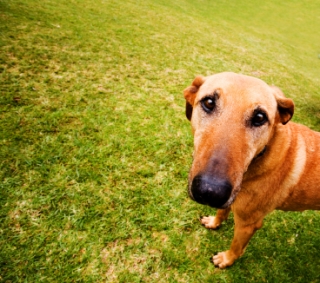
Pet dog training comprises raising good-natured, well-behaved and mannerly dogs that are under off-leash, distance verbal control (at home or in parks). Raising puppies is fun. Socialization is effortless and enjoyable and behavior and manners training is easy and effective. Similarly, living with friendly, confident and mannerly adult dogs is wonderful once all of the training has paid off and now the dog acknowledges household rules and fits in seamlessly with your lifestyle. Personally, I enjoy living with dogs more and more the older they get. I find the prolonged sunset years of the relationship to be magical. Unfortunately, not all dogs get to enjoy their sunset years in their original homes. For many dogs, adolescence stands in the way.
A puppy appears to be well-behaved, confident and acts like Mr. Sociable one month, yet by the next, behavior problems are rife, temperament problems appear seemingly out of nowhere and basic manners and off-leash reliability crash and burn. All of these problems are predictable; it’s not as though they have never happened before. And, all of these adolescent problems are preventable and so, it’s about time we prevent them from happening again.
For many dogs, housesoiling, destructive chewing, excessive barking and separation anxiety become the equivalent of terminal illnesses. As existing problems worsen throughout adolescence, the puppy/dog is banished from the house and progressively confined outdoors, to a garage or basement, to a kennel in a shelter and sometimes, to a black plastic bag.
Puppies must be housetrained, chewtoy-trained and taught to enjoy settling down quietly and calmly before they are eight-weeks old. Also, owners need to be taught how to continue the training during the puppies first few months at home. It is just too silly for people to purchase or adopt puppies that are not housetrained or chewtoy-trained, especially if they don’t know how to do it themselves. Failing that, adolescent dogs must be housetrained, chewtoy-trained, socialized and taught basic manners within the shelter prior to re-homing.
Adolescent dogs also become fearful and aggressive towards people, especially including children, men and strangers but also, towards family and friends. Fear and aggression towards people is unbelievably easy to prevent because development is so slow and all the warning signs of a future bite are apparent by three-months of age: “He takes a while to warm to strangers”, “He’s not overly fond of children” and “He’s a bit tricky around his food bowl or bones”. And my favorites: “His recalls are slowing down”, “He never comes when I call”, “He’s a bit hand-shy” and “He wriggles when I try to hold him”. How on earth can people miss these signs? The dog doesn’t want to approach his owner, ducks his head when the owner reaches out and struggles when handled and hugged. The poor dog is just crying out for help. When the bite eventually happens, (“when”, not “if”), we desperately hope that the dog causes no damage because he learned safe and reliable bite inhibition as a puppy during off-leash play.
Puppies must socialize with and be gently handled by at least 100 people, especially children and men, before they are eight weeks old. Additionally, puppies must socialize with and be gently handled by at least another 100 people, especially children and men, before they are three-months old and the Critical Period of Socialization hypothetically closes. There are no excuses; puppies may be safely socialized to people at home, provided household members and visitors leave outdoor shoes outside.
Moreover, socialization and classical conditioning must continue indefinitely. It is just too silly for people to purchase or adopt puppies that have not been prepared to live with people and especially have not been taught to enjoy being handled and hugged. It is even sillier to suddenly stop socializing a puppy/adolescent/adult dog, thinking that it is adequately socialized. Behavior never stays the same— either it gets better, or worse.
Dog-dog reactivity appears out of the blue very early in adolescence. After just a couple of scary scraps in the park, big dogs and little dogs especially are kept on-leash, which severely exacerbates reactivity. Walks decrease in frequency and dog-dog socialization zeroes out. Dogs fight because: 1. They are dogs, 2. Classical conditioning is non-existent after three or four months of age and 3. Socialization stops dead after a couple of scraps.
Perhaps the surest bet in dog behavior is that adolescent dogs, especially males, will get into scraps. Prediction approximates a 100% certainty and prevention requires non-stop classical conditioning from puppyhood, throughout adolescence until the dog’s sunset years. Of course a three-month-old puppy is a party animal. The goal is for your dog to remain sociable throughout adolescence and well into adulthood. Never take a puppy’s or young adolescent’s friendly greetings for granted. Every time your three-month-old, four-month-old, five-month-old, six-month-old puppy, or adolescent or adult dog greets or acknowledges another dog, say, “Good Dog”, smile and after the other dog passes by, give your dog a friendly pat or a piece of kibble.
Continued socialization and classical conditioning to prevent fearfulness and aggression towards people and other dogs, however, acquired bite inhibition is much (MUCH) more important. The level of bite inhibition acquired in off-leash puppy class play sessions is the single most important prognostic factor for dogs that bite and dogs that fight. If they cause no damage, then they are not dangerous and so, rehabilitative socialization may safely continue. If, however, they cause injury to a person or another dog, then they are potentially dangerous and must be kept away from people and other dogs. Quality of life will take a nose-dive. Bite inhibition is easily learned in puppyhood but it is time-consuming, difficult and often dangerous to try to teach bite inhibition to an adult dog.
There is nothing in this blog that is not brutal common sense and I have written about Minimal Mental Health Guidelines for raising puppies and guiding them through adolescence many times before. I have scheduled just two more lectures on these topics for Orlando and San Francisco. (The latter will be videotaped by Tawzer Dog Videos.) Then, I plan to devote the rest of my US seminar-series to a sorely needed make-over of pet dog training.
My passion has always been devising easier, quicker and effective ways to establish off-leash, verbal control when the dog is at a distance, distracted, without the continued need for food lures, rewards, clicks, treats, leashes, collars, halters and harnesses and especially, without the need of any scary or painful training tool at all. Major foci of my program have always been how can we reduce and eliminate the need for punishment (a definition of training in itself) and how quickly can we phase out the necessity of training tools? Otherwise, temporary training tools quickly become permanent management tools.
Products from Dr. Ian Dunbar
Learn effective and enjoyable dog training methods that are science-based and ready for real-world dog training.
Probably the most creative, cutting-edge dog training video on the market. Dr. Dunbar's easy and enjoyable lure and reward techniques make training fun for you and your dog.
Topics include: Socialization. Fearful and/or Aggressive Pups. Handling. Communication. Sit, Down & Stand.
Day 2: Reinforcement Schedules, Punishment and Rekindling the Relationship in Dog Training
When you get a new puppy, you need to meet six developmental deadlines before your puppy is just five months old. Know what they are BEFORE you get your puppy!