



Error message

User warning: The following module is missing from the file system: recaptcha. For information about how to fix this, see the documentation page. in _drupal_trigger_error_with_delayed_logging() (line 1184 of includes/bootstrap.inc).

New Free Course – Six Simple Steps to Solve Your Dog's Behavior Problems

We've just published a new FREE course on Dunbar Academy called Six Simple Steps to Solve Your Dog's Behavior Problems. This course is filled with short videos and downloadable documents that provide

Help Every Puppy Get the Education They Deserve

Please, please, PLEASE help us make sure every new puppy gets the education they desperately need and deserve this holiday season.  Please tell everyone you know about our 2 free puppy training...

The Essential Puppy Training Course is HERE!

We are thrilled to announce the release of our all-new Essential Puppy Training Course. We've been hard at work developing this course for the past year and are extremely excited about it. So to

All Puppies Deserve a FIRST Chance — an EDUCATION!

Owners and their new puppies are still getting the short end of the stick. Dog problems are invariably blamed on “irresponsible dog owners” BUT they are simply at a loss for what to do, and, no...

Dominance and Dogs: Who is the Boss?

Dogs often act as connectors in society. Upon sharing your life with a dog, you may find yourself talking to more people when you’re out and about at the dog park, cafes, etc, or you may even...

Resolving Dog-Dog Reactivity

FOR A LIMITED TIME Watch the all-new Dunbar Academy Dog-Dog Reactivity webinar for FREE, where Dr. Ian Dunbar explains the common causes of reactivity and how to resolve reactivity using 10 easy and...
Beagle_pup_shoe.png

Preventing Adolescent Problems

Always make a point of praising your dog and offering a couple of treats whenever he eliminates in the right place. Keep a treat container by your dog's toilet area. You need to be there anyway to inspect and pick up your dog's feces (before the stool becomes home and dinner for several hundred baby flies). Remember, you want your dog to want to eliminate in his toilet area and to be highly motivated to do so, even when he develops geriatric incontinence.

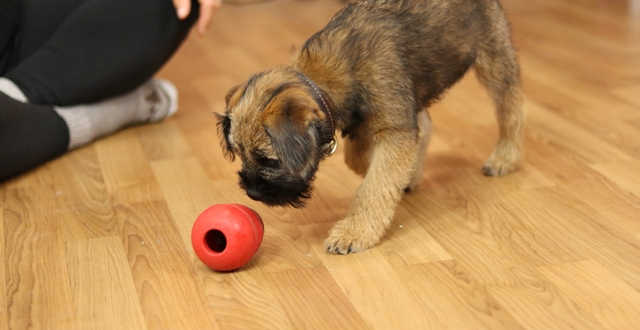
Similarly, a stuffed Kong a day will continue to keep the behavior doctor away. Your dog still needs some form of occupational therapy to idle away the time when left at home alone. There is no magic potion and there is no drug that will prevent household problems, such as destructive chewing, excessive barking, and hyperactivity, or alleviate boredom, stress, and anxiety as quickly, easily and effectively as stuffing your dog's daily diet of kibble into a few Kongs.

610_Fighting.png

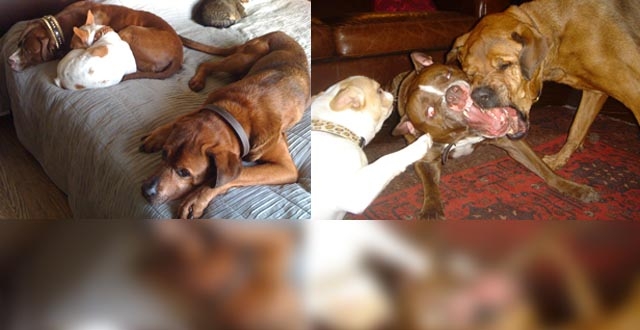
Fighting

"He fights all the time! He's trying to kill other dogs!"

The fury and noise of a dogfight can be quite scary for onlookers, especially the dogs' owners. In fact, nothing upsets owners more than a dogfight. Consequently, owners must strive to be objective when assessing the seriousness of a dogfight. Otherwise, a single dogfight can put an end to their dogs' socialization. In most cases, a dogfight is highly stereotyped, controlled, and relatively safe. With appropriate feedback from the owner, the prognosis for resolution is good. On the other hand, irrational or emotional feedback, besides being upsetting for the owner, can exacerbate the problem for the dog.

 
Training:  Adolescent Aggression
dog_park_sniffs.png

Adolescent Changes

A dog's adolescence is the time when everything starts to fall apart, unless you make a concerted effort to see it through to the stability of adulthood. Your dog's adolescence is a critical time. If you ignore your dog's education now, you will soon find yourself living with an ill-mannered, under-socialized, hyperactive animal. Here are some things to watch for.

Household etiquette may deteriorate over time, especially if you start taking your dog's housetraining and other good behavior for granted. But if you taught your pup well in his earlier months, the drift in household etiquette will be slow until your dog reaches his sunset years, when housetraining especially tends to suffer.

 
Training:  Adolescent Changes
Dog_singing.png

Woof/Shush

So many owners, or to be more precise, their neighbors, find excessive barking to be an intolerable problem when dogs are left at home alone. But also, many owners find excessive and uncontrollable barking to be a problem even when they are at home with their dogs. The solution is simple. Teach the dog to shush on cue. This may sound OK in theory but many owners experience huge problems trying to put theory into practice, largely because they try to teach the dog to shush when he is amped up and barking so loud that he cannot even hear the owner’s instructions. We have a better way.

First, let’s put the “problem” on cue and teach the dog to speak on command. Some may think this strange: “My dog barks so much, so why on earth would I teach him to bark more?” Well, if you have taught your dog to speak on command, you may now teach your dog to shush at times when your dog is not over-the-top with excitement and at times that are convenient to you.

 
Training:  Woof/Shush
700_IDPh_Heeling.png

Heel On-Leash

Teaching your dog to heel has been described in some detail in the Puppy Training chapter, Lure/Reward Training and so please go back and review that section. Here, we shall present some additional tips.

Use food or toys in your left hand to lure your dog to heel on your left side. Each time before stopping, use your right arm (across the front of your body) to signal your dog to sit by your left side.

Practice short sit-heel-sit sequences in a straight line, then practice turns in place — sit-turn-sit and eventually, turns in motion. Slow down your dog (move your left hand lure backwards) before turning left but speed up your dog (move your left hand lure forward) before turning right.

 
Training:  Heel On-Leash
z_Ollie_Dune_Claude_.preview.png

Stay Proofing

When you have a lightning-quick emergency Sit plus a rock-solid unbreakable Sit-Stay, you have a pretty well-trained dog that will have a better quality of life because people will welcome his integration into the social scene.

Proofing stays comprises increasing duration, distance, and distractions. Start by teaching short stays simply by delaying the food reward after a position change and counting out time in “good dogs” — “good dog one, good dog two, good dog three etc.” Alternate periods of instructive feedback — "Good Sit-Stay Rover" — with short periods of silent appreciation. With each successive trial, gradually decrease the amount of praise and increase the length of silence.

 
Training:  Stay Proofing
084_Stay.png

Distance Position Changes

Even though you think your dog sits fairly reliably, he probably will not sit if he is at a distance. In fact he probably will not sit if there is any variation in the training scenario. If you turn your back on him and ask him to sit, he probably won’t. If you lie on your back and ask him to sit, he probably won’t. If you ask him to sit in heel position as you continue walking, he probably won’t. But don’t worry, your dog is not being disobedient. Rather, like all dogs, he is an extremely fine discriminator and has only learned precisely what you have taught him — to sit if he is right in front of you, or if he is by your side in heel position. So, you need to teach him to sit in every possible situation and especially, if he is at a distance and distracted.

 
014_Claude_Sit.png

Position Changes & Stays

Once you have used all-or-none reward training techniques to teach your dog to sit- and down-stay, to pay attention, to walk on leash and not to touch, you will find that your dog is now so much calmer and that you have regained his attention. Now it is again possible to use the lure/reward training techniques that worked so well in puppyhood.

Lure/Reward training is the fastest pet dog training technique to teach your dog the meaning of the instructions you use. There is no need to spend time shaping behavior. The dog is lured to perform the desired behavior on the very first trial. Consequently, the dog may also start forming an association between the command and the relevant desired behavior from the very first trial. Lure/Reward training position changes has been described in some detail in the Puppy Training chapter, Lure/Reward Training and so please go back and review that section.

034_Off_1.png

Off & Take it

A major criticism of using food in training is that the dog may become over excited, worry at the food, or even bite the hand that feeds it. However, the use of food is indispensable for classical conditioning, temperament training and behavior modification. Also using food and toy lures and rewards just makes teaching basic manners easier, quicker and just so much more fun for owners. Even so, food is used only initially to teach the dog what we want him to do. Once the dog learns the meaning of our handsignals and verbal instructions, food is no longer necessary as a lure. Also, we want to phase out food rewards and replace them with more meaningful Life Rewards (toys, games, and activities) as quickly as possible. See Food Critics

 
Training:  "Off" and "Take it"
IDDune.png

Sit-Stay & Walk On-Leash

This is one of my all-time favorite training exercises — simply scary in simplicity and shocking in terms of magical results. This exercise actually provides the secret information that some gawdy websites promise over and over but never actually deliver. Watch our videos and see for yourself.

You start with an over-the-top, Iditarod-level leash-puller, who hasn’t paid attention to you for months, or years, and after just ten minutes fun training, you recreate your attentive dog who walks calmly on leash, looks up at you when you slow down and automatically sit-stays when you stop.

Until such a time as your dog is trained to your satisfaction, weigh out and use your dog’s daily allotment of kibble for this and other exercises. You may perform this exercise at home (indoors or outdoors) or on a walk.

Pages

Subscribe to Front page feed
Need CEUs? Join the Top Dog Academy!