









User warning: The following module is missing from the file system: recaptcha. For information about how to fix this, see the documentation page. in _drupal_trigger_error_with_delayed_logging() (line 1184 of includes/bootstrap.inc).
Help Every Puppy Get the Education They Deserve
Please, please, PLEASE help us make sure every new puppy gets the education they desperately need and deserve this holiday season.
Please tell everyone you know about our 2 free puppy training...
Resolving Dog-Dog Reactivity
FOR A LIMITED TIME Watch the all-new Dunbar Academy Dog-Dog Reactivity webinar for FREE, where Dr. Ian Dunbar explains the common causes of reactivity and how to resolve reactivity using 10 easy and...
Getting a Puppy Over the Holidays
The holidays can be a wonderful time to add a puppy or dog to your family, but the holidays also present plenty of challenges. With a little preparation and thought you can get a holiday puppy and
Dominance and Dogs: Who is the Boss?
Dogs often act as connectors in society. Upon sharing your life with a dog, you may find yourself talking to more people when you’re out and about at the dog park, cafes, etc, or you may even...
All Puppies Deserve a FIRST Chance — an EDUCATION!
Owners and their new puppies are still getting the short end of the stick. Dog problems are invariably blamed on “irresponsible dog owners” BUT they are simply at a loss for what to do, and, no...
The Essential Puppy Training Course is HERE!
We are thrilled to announce the release of our all-new Essential Puppy Training Course.
We've been hard at work developing this course for the past year and are extremely excited about it. So to
As a follow on from my last blog, here are three essential commands to train every dog, especially as a preventer of possessive aggression. Hungarian Visla Bruno is learning all three commands using the clicker & a variety of objects. Remember that as a young puppy, it's owners who impart value onto stolen items. The dog has no idea what is worth stealing or not. It's only from the confrontation which results from the theft & the owners tone of voice, that dogs learn over time what's worth taking to get attention. As well as puppy proofing your home, I make sure that if my
There have been some discussion about irresponsible ownership and it inspired me to write part two to my original blog "Neutering: Whats behaviour got to do with it?"
Irresponsible people in my opinion doesn't equal "all dogs should be neutered". I believe it's about whats best for the individual dog. It seems too me the attitude of many owners now is that dogs are a convenience thing and disposable. Many have the idea "The local rescue centre will take him when we can't have or don't want him any more. This just isn't good enough, a sentient life deserves more! Lack of understanding and knowledge of living with dogs doesn't equal "all dogs should be neutered". Neutering is not going to make people more responsible owners because in my opnion there are many other qualities that I think are far more important when it comes to looking at responsible dog ownership.
The surgical removal of the male and female sexual reproductive organs, primarily the testicles and the ovaries is known as neutering. More specifically neutering male dogs is called castration and spaying when referring to bitches.
Immersed in the world of professional dog training with a living laboratory of my own 3 dogs plus a rotating stable of boarding and training projects, not to mention the visiting DIP dogs, every day is some form or another of Take Your Dog To Work Day. But for the unfortunate masses of those in diverse occupations who head to work without Fido because laws and rules dictate leaving the dog behind, this is your chance!
It’s become more and more expected and accepted that dogs are thought of as part of the family. They live indoors with us. We celebrate their birthdays. We deeply grieve their deaths. I feel this way about my dogs and suspect that you do, too.
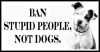
What I don’t feel is the popular opinion that dogs are better than people. I hear people say often that they like dogs more than people or they prefer the company of dogs. Sure, there are some folks I would be less inclined to hang out with, but to prefer dogs over humans seems odd to me. I saw a post on FB yesterday that said this:
When it comes to successfully training a dog or rectifying behaviour challenges, the issue of the owner quality variable is often discussed. This is the ability of the owner to follow through with the programme of retraining, to practice the advice given by the professional. What has been noted less often however, is the issue of owner quantity. Just how many people will be involved in the dog's rehabilitation & how will this affect the success rate?
Earlier this year, I started working with a family & their dog. The family had had the dog for a few years, & had struggled with possessive aggressive for some time. However, as the family grew in size-including several kids, two grandparents & numerous regular household staff-the dog's behaviour had deteriorated significantly .
Pacifying behavior (Latin pacificare, from pax = peace and facere, facio = to make) is all behavior with the function of decreasing or suppressing an opponent’s aggressive or dominant behavior. There are two ways of classifying pacifying behavior: (1) to include all behaviors with the function of diffusing social conflict, and (2) to restrict it to a particular range within the broader spectrum of conflict decreasing behavior (see diagram). This author prefers the latter because the broad use of the term in the first option makes it synonymous with conflict decreasing behavior in general, without reference to any particular sub-class of this behavior.
Children and dogs should go together but people must understand that a certain amount of conditioning is involved before a dog can understand that those fast moving, small creatures with inappropriate handling skills are actually safe to be around. Let’s look at the dog’s perspective on children for a moment. Imagine being a dog for a moment and suddenly this small creature runs full speed towards you, eye level with outstretched arms, hands waving with a high pitched voice! Yikes! Now imagine that you are not only a dog but you are tethered and cannot escape this little invasive being! Yikes again!
Dogs are amazing, we all adore dogs but how much is too much? Is there such a thing? Some dog/owner teams get the balance just right while others seem to be in need of an intervention. We talk about “hyper vigilance” in reactive dogs but many owners act the same way when it comes to fussing over their canine’s every perceived need or behavior. Much of the time dogs would be just fine if not for the stress cues of their owners. Can humans make their dogs more neurotic/aggressive/fearful or anxious by behaving a certain way? Is there such a thing as a codependent relationship between an owner and his or her dog? Most dog behavior professionals would say, “Yes” on both accounts.