









User warning: The following module is missing from the file system: recaptcha. For information about how to fix this, see the documentation page. in _drupal_trigger_error_with_delayed_logging() (line 1184 of includes/bootstrap.inc).
New Free Course – Six Simple Steps to Solve Your Dog's Behavior Problems
We've just published a new FREE course on Dunbar Academy called Six Simple Steps to Solve Your Dog's Behavior Problems.
This course is filled with short videos and downloadable documents that provide
Getting a Puppy Over the Holidays
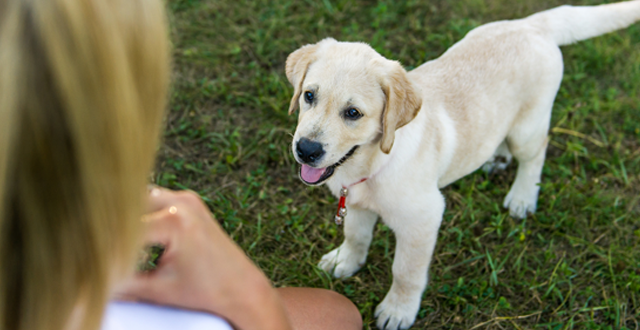
The holidays can be a wonderful time to add a puppy or dog to your family, but the holidays also present plenty of challenges. With a little preparation and thought you can get a holiday puppy and
Resolving Dog-Dog Reactivity
FOR A LIMITED TIME Watch the all-new Dunbar Academy Dog-Dog Reactivity webinar for FREE, where Dr. Ian Dunbar explains the common causes of reactivity and how to resolve reactivity using 10 easy and...
Puppies and Shelter Dogs: Two Sides of the Same Coin
I am a dog trainer and I lead a double life. Of sorts. Behaviorally speaking. I am the Director of SIRIUS Puppy Training, a San Francisco Bay Area puppy training school. Our mission is to teach new...
Help Every Puppy Get the Education They Deserve
Please, please, PLEASE help us make sure every new puppy gets the education they desperately need and deserve this holiday season.
Please tell everyone you know about our 2 free puppy training...
All Puppies Deserve a FIRST Chance — an EDUCATION!
Owners and their new puppies are still getting the short end of the stick. Dog problems are invariably blamed on “irresponsible dog owners” BUT they are simply at a loss for what to do, and, no...
We have just completed a most interesting genetic study of blanket sucking/flank sucking Doberman Pinschers and have found what we think is the gene underlying this behavioral discrepancy. The gene in question expresses itself in areas of the brain known to be affected in OCD in humans and affects processes now thought to be instrumental in propagating OCD.
With delight and surprise, scientists refer to canine compulsive disorders as “models” of the human condition and see them objectively as ripe for study, which they are. But we all know that dogs and people are more alike than different, so to us it comes as no surprise that they have similar psychological issues. Nevertheless, it’s good to have psychiatrists and dog behaviorists on the same page because that way we will get more done for both species.
I’m in Italy this week and it’s absolutely lovely. The September weather is ideal, sunny and warm with a gentle breeze; there’s a perfect mix in the air of the fading bloom of summer into the crispness of the promise for a spectacular fall. The golden landscape is gorgeous and each town we visit has a rich past and plenty of historical sites to prove it. The people are friendly are and of course the food and wine are divine!
However, as wonderful as it is, it’s also been stressful. You see, I don’t speak Italian, and, especially in the small villages we’re mainly visiting not that many people speak English.
Living among my multiple dog family is a joy for me. I can watch them playing and communicating with each other for hours and never tire. My five furry companions are funny, fascinating and even wonderful teachers, but they are also a ton of hard work! Thankfully, I have a husband who is equally devoted to our multiple doggie home and works with me to do all the things that need to be done in a day.
Are you a dog-lover? If so, one of the very best things you can do for dogs is to teach them how to best navigate our human society. The standard is high, and getting higher every day, especially with the threat of anti-dog legislation breathing down our necks. For dogs to continue to succeed as our constant companion in today’s world, they need to be mannerly and social, comfortable around people, and savvy enough to stay out of “trouble”.
Training is one of the best things you can do for a dog. Providing exercise and appropriate outlets for natural doggy behaviors is another, and actually facilitates the training process as well. Socialization is the third component is this triad of canine triumph.
More exciting research with dogs was released last week. This new study provides more evidence that dogs tend to follow human cues very closely. I wrote about an earlier study and the always fascinating Belayaev Foxes over here and here
The researchers performed a test with dogs and human-raised wolves and 10 month old toddlers. They first performed the test with dogs and toddlers. As has been repeatedly reported in the news, the dogs frequently made the same "mistake" as the toddlers: relying too heavily on nonverbal cues to figure out where an object is hidden. This suggests that dogs reading human "body language" similar to the way human children do.
I am so proud that the people at Fences for Fido are doing their great works right here in my area. It’s not just about the fences they build, the dogs they unchain and the people they educate. It’s also about their choice to meet the problem where it’s at and provide a real solution.
You’ll see this organization isn’t about judging, complaining, blaming or shaming. Instead of telling people that they’re wrong, they are providing an actual fix for the immediate problem and in the process providing education and awareness.
Puppy problems may look harmless now, but unless you do something about them, they’re going to get bigger and badder. Puppies don’t naturally grow out of their biting, jumping up, barking or chewing habits. Instead you have to train them how to do these things appropriately. Fortunately, puppies are eager to learn. The Dunbars explain the importance of tackling puppy problems head on, as early as possible.
In the Army, you spend a lot of time sitting around waiting for something to happen. Today, at least based on what I have seen and read, this time can be spent on the Internet or playing video games. Back in the pre-YouTube, pre-xBox and pre-Iraq/Afghanistan days, we played cards.
I'll always be a mediocre card player, but after three months temporarily stationed in Crete, where there wasn't a lot to do and I spent half of the time on crutches, (long story, tangentially involving turkeys) I became a serviceable "spades" player.
Dog trainers, breeders, veterinarians and shelter staff usually have a veritable bounty of useful information to impart to puppy-buyers. Unfortunately, prospective dog owners rarely take heed. When handling cute and cuddly puppies, people seldom acknowledge the timely nature (urgency) and utmost importance of training advice vis a vis appropriate husbandry and especially the prevention of predictable problems. Young pups are often viewed as animated furry toys, rather than the nearly full-size, adolescent dogs, that they will be in just four months time. Future puppy owners just cannot conceive that their bundle of fur could ever pose a problem — a classic example of the Problem? What Problem? problem. Consequently, the onus lies with trainers and other dog professionals to try to get prospective puppy-owners to wise-up pronto!