Your Dog's Just Not That Into You
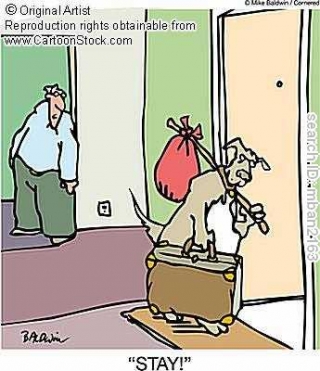
During our Basic Manners I class, I usually go around the room and have each new student introduce themselves and state what they hope to accomplish from attending the class. Just like my new friend Casey Lomonaco has pointed out, teaching their dogs not to pull on the leash is a popular objective but teaching their dogs to come when called is right up there too. In fact, I'd say when a dog refuses to come is even more irritating because it manifests much more often and occurs at the most inopportune times like when you're running late for work and need to get your dog into the house, when it's pitch dark outside and you want to go to bed, or when there's 3 ft of snow on the ground and sub zero degree temperatures! When it comes to leash walking, yes, that is definitely something that needs to be taught. Dogs aren't born with leashes attached to them and walking while tethered to a human is certainly something that doesn't come naturally! However, most students are shocked when I tell them their dogs already know how to come when called. It's a natural behavior for dogs to follow. Sure, we have to attach the behavior to a word or cue, but that's easy and something we do when the pups are still with their litter. You entice them to come to you with high pitch "pup, pup, pup," clapping our hands, getting down on our knees, whatever it takes, and then most importantly, when they get to us we pet them, give them treats and make it a pleasurable experience! Not rocket science and unlike leash walking, very little technique is involved. Unfortunately, as the pups get older and the longer we have them, we teach them how not to come by attaching that same word/cue with undesirable consequences like leaving for the day, putting them in their crate, ignoring them, or just plain indifference. But apart from that, when your dog sees you, looks right at you, hears you calling for him/her, and then makes the choice to turn away from you and run in the other direction should be a wake up call about your relationship. Your dog's just not that into you.
Think about it. It's one thing if your dog is in full flight chasing something, a squirrel, a cat, another dog and doesn't come when called. At that point he's fully involved in the task at hand and probably doesn't even hear you. But if your dog looks right at you, nothing else is really going on, and he chooses to turn and run away from you, that's a different story. Your dog is pretty much showing you that he'd rather do anything but come to you. In his mind you have nothing he wants, nothing he needs. That's a problem. So, when I tell students and potential clients that their dogs not coming when called is a relationship problem rather than a training issue, some find it a little hard to take. It's so much easier to just blame the dog for being bad or stubborn than to take responsibility for not cultivating a strong enough bond or partnership with the dog. I've found that dogs who regularly run away from their owners also lack attention and rarely even look at them. Most often they are pulling away, looking at everything else in the room, and need multiple cues before performing a behavior and usually have to be bribed first.
So, how do you get your dog to be into you?
1. Play with them. Every day. And it doesn't have to be physical play. Mental exercise and training games can be just as if not moreso rewarding and stimulating to a dog. Make it a part of your daily routine and something your dog looks forward to.
2. Hand feed. Yep, we're back to this. To me there is no better way to elevate your importance to a dog than to remind him that you are the keeper, not just the server, of the food.
3. Take your dog with you whenever you can, even on short outings to the bank, post office, etc. Some of the greatest dog/human partnerships I've ever seen are those between long distance truckers and their dogs! Why? Because their dogs are their co-pilots with a vested interest in the relationship.
4. Okay, this one might be controversial, but don't take your dog to off leash dog parks. Sorry, but off leash dog parks are some of the most opportune places to teach your dog to ignore you! Instead, opt for smaller play groups consisting of just one or two other dogs at a time and along with the other owners, practice getting your dogs to check-in by clicking/treating when they randomly come over to you. Most importantly, when you do call your dog to come to you make it a fun, pleasurable experience complete with a jackpot of the absolute hottest food reward you can find.
5. Participate in a dog sport, not necessarily to ever step into a ring and compete, but moreso as a relationship-building activity. But be careful. Not all dogs like or are suited for all dog sports. Try out several different ones and pick one that your dog not only thoroughly enjoys but is crazy for!
What would happen if you didn't work on the relationship or spend any quality time with your spouse or significant other? What if you regularly ignored your children and never took them anywhere? All relationships take work and those with our dogs is no different.