
Teaching what you don't want, by teaching what you want!
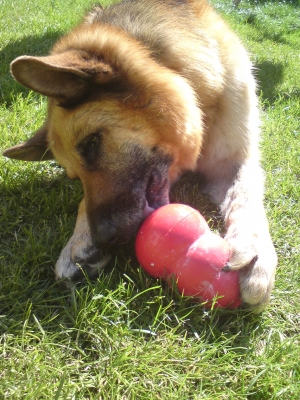
DSC00065.JPG

Often when we think about undertaking some formal training with our pets we usually have a list of things we would like them to stop doing.

These can be:
1. stop Rover from pulling on the leash
2. barking at other dogs
3. chewing up the furniture …

When we then think about how to change these behaviours it often seems natural to think of some way to stop the dog from doing them by using some form of punishment. Although we know that punishment does works to stop certain behaviour if applied properly this is not very easy to do and has side effects. So what if we thought about training our dogs in a slightly different way:

One question we often forget to ask when we think about training our dog is “what would we like him to do?” So instead of the responses mentioned above we would think how would like Rover to:

1. walk on a loose leash
2. sit and look at me as another dog walks by
3. chew on these certain toys

It seems much easier and faster for me to teach my dog to chew on 5 specific toys than to go around my whole house teaching him hundreds of items I don’t want him to chew.

Also with this approach we are teaching what we would like them to do instead of the undesired thing. By doing this we are not leaving them to guess and get it wrong again. Think about a child who is scribbling on the wall. If we just use punishment the child may stop scribbling on the wall and try something else, this may be just as as undesirable or not what we want the child to do. However if we were to redirect the childs behaviour to a colouring book containing their favourite characters and praising them for using it (with something they actually find rewarding) then they are more likely to use the colouring book, which is great because the time the chid is using her book she is not using the wall, floor, fridge...

So if you have a few minutes write a list of three things you would like to change with your behaviour then next to them write what you would like him to do instead then come up with a plan to teach this. If the new thing you would like him to do is more rewarding than the thing you don’t want him to do, what do you think he is going to choose?

(Picture: Kane learns that chewing his toy which has been stuffed with his dinner and added sardines is much more fun and rewarding than chewing on my furniture.)

Millie and Cat

Hi Chirag! Just spoke to a girl I recently met on a flight from Dublin to Cardiff with a tiny black Lab Puppy Millie. We had a long chat on the plane and later in the car, as my dog Woody and I gave them a lift back to London in the car. I had just finished a 3 day Dr.Dunbar workshop in Dublin with my dog and was happy for some company. After a long chat with Cat, the importance of that little dog became very clear to me. Being her first dog and looking for advice, we had a great chat about the importance of getting started the right way with the right methods and to get going with puppy classes, socialisation and all round dog matters. As I work in West London it wasn't feasable for me to take on the dog, so I gave Cat a check list of important things to look for in a Puppy Class/Dog Trainer. I am very glad she found you, as both are very special, and you obviously ticked all the right boxes on the check list. Cat is very happy about the progress in the dog and very much enjoys the training classes. Just thought I let you know as we are both DSD members. Take care and kind regards - Kim

What a small world!

Hey Kim

Nice to "meet" you!!! Yes Millie and Mum are indeed in one of my current puppy courses and doing very well. Thats so funny as Catherine was at a puppy party that I run together with a nurse at a local vet practice the day after she bought Millie home and was telling me about her adventures in the plane and how she met a very nice lady who turned out to be a trainer. Small world.

How did you find the workshop? bet it was great! Did Ian mention what advice you would give a new puppy owner if you only had a short time using his example of when he was one a flight and met some one who had just purchased a new puppy. If he did then you had a perfect chance to practice lol

Where about in West London are you? I am often in London and so feel free to email me cpatel@domesticatedmanners.com as it would be great to meet up at some point.

Chirag

www.domesticatedmanners.com
cpatel@domesticatedmanners.com

Maybe I'm not seeing the option available

Hi Chirag,

I'm a mommy of a 4 month old rescue puppy that's mostly GSD, named Khumbu. I've had him since 8 wks old and he's a super smart little man with much love to give. He's very curious orally, however, and grabs wood chunks, garbage (nearly trained out of), wildlife feces (trained out of now!) and lots in between. His weekly puppy class has been very helpful with advice for most of our training needs, but the techniques they've recommended have not been working with his grabbing and eating of everything.

His desire to eat/pick up random things, wood chunks in particular, is very strong. I'd love to use your training technique to give him something that's ok to grab, but with what I've tried so far, it doesn't seem to be of interest. Besides constant "leave it"'s (& click&treats when he does it good, which is often, but he still goes back for the next piece of 'whatever' time and time and time again!) and bringing a toy along for him to have something to carry/chew on while we walk... I'm at a loss. Oh, and I do feed him! It's not at all like he's being underfed.

The real issue now is that it's beginning to frustrate me tremendously. Two weeks ago, he got very sick and vomitted up a stuffed toy and very impressive sized piece of wood. It didn't end there as he wound up having a chunk of wood in his stomach that the vet located in his small intestine. It passed later that night thanks to fluids, but was a stressful situation for a new puppy mommy. The most recent has been his eating of bathroom garbage at a friend's place. Now he's been sick for three days again.

So it's beginning to cause me immense distress and tonight, I nearly came to my breaking point. The poor boy has no privacy on walks as I'm constantly on him for picking up and trying to eat stuff constantly. If there's anything you can recommend with your technique I'd be forever grateful. I'm at a total loss right now and am wondering if this is something that I need to simply accept (along with the fact that he may get severly injured or worse from it), can train him out of, or if I have to do as every page says ... patience and consistency (which I've also been good at until tonight). It simply kills me every time he picks something up outside... which is honestly every minute or less.

Thanks so much for your help, if there's a book I can read, it would be great. My puppy class trainers keep saying I'm doing everything I can and it's just something that dogs do. But it's starting to tear me apart :(

Dear mtngrrl I love German

Dear mtngrrl

I love German Shepherds there are great dogs (not that it’s a biased opinion or anything).

I know how it feels when one thing that may seem small to start can become a really frustrating issue, which impacts on the relationship with out great pets.

As I am sure you have discovered puppies will use their mouth to investigate and some will do this more than others. Some of these puppies do seem to do this behavior to the extent where they have to have stones, sticks, toys… removed from some part of their digestive tract. Only a few weeks back I had a Rottie puppy in class who had to have a stone removed from his stomach. But I am sure there are a few things that we can have a look at that will hopefully help with this problem.

I have a few questions I was wandering if you could answer:

Does he like to have things in his mouth in the house; is he always chewing on something?

Does this problem just occur outside?

When he first started picking up the wood and bits how did you get them off him or didn’t you?

Are you able to get him to let go of the object once he has it in his mouth, how do you go about this?

It seems like your puppy school has given you some good advice so far and you say that you have nearly trained him out of grabbing a few things, how did you go about this?

Chirag Patel
www.domesticatedmanners.com
cpatel@domesticatedmanners.com

My munchie GSD

Hi Chirag,

I'm really thankful for your quick reply. To answer your questions:

"Does he like to have things in his mouth in the house; is he always chewing on something?"

In the house, he does chew on his CET chews, Vet Enzadents or a bone from the vet. He plays with his favourite toys and chews on those too (Kong, etc.), but leaves household items alone. He doesn't chew all of the time though and will just chill out with no chewing, despite having options available to him. This past weekend when I took him to a friend's for a play date, however, he got into her bathroom garbage and, come to think of it, I did buy a new gargage can with a lid for my bathroom as he was getting curious about it.

"Does this problem just occur outside?"

This is a mostly outside issue.

"When he first started picking up the wood and bits how did you get them off him or didn’t you?"

He came home with me at 8wks and started right away picking up acorns. For the first couple of days, I let him grab and carry them. He also liked leaves back then, but they never became an issue. When an acorn came out after eliminating, I decided no more acorns. At that time, I introduced "leave it" as recommended by the puppy class trainer. It didn't take him long to stop, but then he went to the next object - wood. At the same time he also became curious about wildlife feces (I live in the mountain parks, so we have everything here to tempt him). The wildlife poo took very little time to train him out of and now he mostly walks by and if he gets a piece, he drops it right away after hearing "drop it". I used the same "leave it" + click & treat technique as done with the acorns and the wood. With the wood, at first, similar to the acorns, I let him initiatlly pick up bits and tried to throw sticks for him - which he was only interested in half of the time. It initially looked like a curiosity thing, but after a few days I noticed him sometimes trying to eat it.

So, with the wood it seems to be a different love affair (and bones too). Those nice little landscape woodchips that are everywhere are a fave of his, as are other bits, like bark. Living in the mountains makes it nearly impossible to have a wood free outdoor environment. I stopped throwing sticks for him because I want to be consistent in not allowing him to have wood. And he's very inconsistent with eating it anyway, so I can't tell when he will or won't. For example, I had him on a 30 minute walk this morning and he only grabbed one wood chunk that had to be taken away by my hand. So, I just never know with him cause he grabbed 6 chunks of wood two days ago that had to be removed from his mouth/throat as "drop it" and click & treat wouldn't work.

Tree pollen has been another story though, as it's everywhere and he's having a hayday with it. Even though it's less harmful cause it's soft... again, I'm trying to be consistent and get him to "leave it" or "drop it". But on the pollen, it's largely to no avail - he hardly ever drops it.

Rocks don't seem to be massively of interest, however, I have seen some pebbly sized rocks twice after he eliminated.

"Are you able to get him to let go of the object once he has it in his mouth, how do you go about this?"

Yes, most of the time. I do this by watching VERY closely on walks (walking is no longer relaxing and enjoyable) and when he does get something, I say "leave it" if it's on the ground or "drop it" if it's in his mouth (sometimes "leave it" comes out instead though, as I've just been introducing drop it, grab it, etc.), then "click" as soon as he's dropped it or left it & "treat" for his reward. Both seem to work... again, for the most part. If he has something like a woodchip that's truly found his heart or a bone, then I'll have to brace him and dig out whatever I can get from his mouth/throat. A friend who's raising a guide dog puppy said her trainer taught her that doing this also makes it even less of a reward and from my perspective, I'd rather dig it out with fingers then have to take him to the vet again.

"It seems like your puppy school has given you some good advice so far and you say that you have nearly trained him out of grabbing a few things, how did you go about this?"

I've been consistent across all of the objects really, except that I'm starting to introduce drop it as well. This hasn't had any change in the amount he picks up or drops stuff though. He actually seems to respond to "leave it" for anything related to grabbing stuff whether it's in advance of getting it or after it's in his mouth. As he's only 4 months though, I would like him to learn both commands, which is going mostly well.

I just realized how much text I wrote... sorry for taking up SO much space!

Options

Hey

It seems like your current trainers have provided you with some very good advice and you are doing a great job in trying your best to use this information and apply it.

It great to see that Khumba has a good leave and drop cue and this is something I would suggest you continue to develop.

It is probably ‘normal’ puppy behaviour but something that you want to decrease Khumba from doing on objects which are likely to cause him harm. I understand that it is difficult regarding the wood as you have lots of it where you live but I still think that there are options.

Its great that you use the CET chews and toys, I would suggest taking this a step further and maybe feeding a large amount or the whole of his meal in the chew toys like the Kongs, squirrel dudes, tug a jugs… throughout the day for a couple of reasons.

1. This will provide him with appropriate items to chew indoors and provide him with adequate teething needs.
2. They will also provide him with further stimulation.
3. You can also use the toys outside to start making walks fun again and providing him with an alternative more rewarding behaviour to engage in as oppose to the wood "chomping".

This can’t do any damage and could potentially help so is worth a try.

The next thing I would suggest is that when you are out on your walk introduce other activities that he can engage in which are very rewarding. Activities that come to mind are:

1. 'Nose work' games. These can take a number of different forms involving following a small trail leading to a toy or reward of some form. Asking Khumba to sit and hiding his Kong pre-stuffed (with a bit of peanut butter or any thing else your puppy finds very rewarding) and asking him to find it. Reward with a few licks before you hide it again. If he like playing tug then the toy he finds can be his tug toy and the toys and be placed off the ground.

This isn't as complicated as it sounds and you can use the basics.

2. You can teach Khumba to hold something in his mouth when he is just walking by your side and reward him heavily for carrying this object. Offer it to him if you see him searching for wood or as mentioned above when he is just walking by your side. Don’t expect him to carry it too long to start with. Click and treat after a second or two then build it up.

Make sure that the walks are not too long. If you find that he picks up more toward the end of your walk then maybe cut your walk short a little so you don’t get to that point.

I am not suggesting that you do the above for the whole walk but integrate them into your off leash activities.

When Khumba is on leash I would set up and practice teaching him to do an alterative behaviour of giving eye contact when you walk past these wood chip things. Practice will low value item first before you practice with the wood chips. The more setups you do the better it will work. These the initial sessions short at first. (Granted this will be much easier indoors or in set up areas where the wood won’t be scattered everywhere, but will start to build that foundation behaviour. Then when you are outside in real life if ever he gives you eye contact instead of grabbing at the wood heavily reinforce it. You do have to be watching out for this as a lot of owners miss the opportunity and the dog learns that there is no point in trying this behaviour).

You should ask your puppy school if any of their trainers offers 121, if you would like help teaching any of the steps above or starting some very basic fun nose work games.

It is very important to make sure your puppy is successful at every step and what you are asking for isn’t too demanding.

By reinforcing these alternative behaviours and provide other more rewarding options outside hopefully your puppy will choose these and not practice the wood chewing / eating as much.

Most puppies I see do tend to stop that behaviour with training and as they get older. Both factors are important it is probably less likely that he will grow out of it with age alone so it looks like you are heading in the right direction.

Lastly remember that most puppies will pick things up carry them, chew them and eat them. Your not aiming to stop this totally as it will probably be very hard it’s not ‘normal’. With my dog I let him carry large sticks or bottles and ask him to drop ones I feel are not safe as the stick maybe too think and likely to crack. Once I ask him to drop and he does I will do something very rewarding with him so that he doesn’t go and pick it back up.

Chirag

www.domesticatedmanners.com
cpatel@domesticatedmanners.com

Options

Hi Chirag, I can't thank you enough for this awesome advice. I'm going to work on it and also speak to the puppy class trainer tonight about a 121. Have a great day!

Dog Star Daily® Recomended Products:

  • DOGS BITE But Balloons and Slippers Are More Dangerous
    DOGS BITE But Balloons and Slippers Are More Dangerous
     
  • Zuke's Salmon Mini Naturals Dog Treats (6-oz pouch - salmon flavor) cover image
    Zuke's Salmon Mini Naturals Dog Treats (6-oz pouch - salmon flavor)
     
  • It's Not the Dogs, It's the People! A Dog Trainer's Guide to Training Humans
    It's Not the Dogs, It's the People! A Dog Trainer's Guide to Training Humans
     
  • How To Speak Dog cover image
    How To Speak Dog