
Something to prove
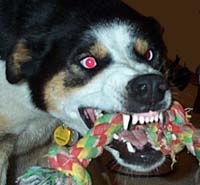
Something that always gets me during a consult, or even before, is when the owner offers to have their dog demonstrate the reason you've been called in. They want to take the dog for a walk and "find another dog" so I can see their dog's reaction to it. They want to go get a bowl of food or a bone and give it to the dog so I can see how the dog behaves when they attempt to remove it.
I don't need to see it. I've seen it. What I'd like to see is their dog never do it again. I gently encourage them to take a mental snapshot of their dog's behavior during that last episode and mentally file it away because we're going to aim to NEVER see it again. That is a neuron path we're not going for a walk down again any time soon - hopefully. One rehearsal of a particular behavior can take weeks, months, even years to counteract depending on the severity and sensitivity of a particular dog. We focus on the solution, its steps, and not so much the problem anymore.
I think that is something that distinguishes many trainers as well. Most rewards-based trainers don't want to see that behavior knowing full well what it looks like. We are interested in the recovery process - the rehab, if you will. We are able to pick up the subtle signs that the dog has or is reaching threshold. We know that there's a point we don't want to reach because in an effort to change the emotional response of a dog prodding and poking at his sore point is counterintuitive. We dance around, up to, and back away from a threshold all while making the dog feel good about what's happening. We do it for the dog and its owners, not for ourselves.
See behavior(2%), assess behavior(23%), fix behavior(75%). Those are numbers I can live with. I'll keep my drama where it belongs - on TV.