
Shelter Dog Prevention

minipup 4 small.jpg

People often misunderstand Dr. Dunbar’s and my intense focus on puppy training. “Your materials are so focused on puppies, what about shelter dogs?” they ask.  Others lob zingers such as, “It’s easy to focus on puppies, real dog trainers deal with problem dogs.”

Rescuing dogs is most definitely en vogue at the moment; philanthropy and social causes have permeated the collective consciousness as never before. I’ve heard statements such as “shelter dogs are the new black” and I think it is wonderful that so many people out there are now aware about the plight of homeless animals; that is a beautiful paradigm shift for humankind.

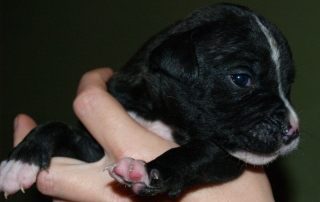
But the fact still remains that all shelter dogs started out as puppies.

Puppies with extremely malleable personalities and super-spongy-ready-to-absorb-input-brains taking things in and creating a behavior profile and bias based on these early experiences.

Wouldn’t it be better if shelter dogs never ended up in shelters in the first place?

This is the reason we focus on puppies! We are doing our best to spread the word about early puppy education in order to quell the influx of unwanted dogs BEFORE they become unwanted.

Sure we have a puppy training school, it is a tremendous part of the cause. And YES, it is easy to train puppies, that is the point!!! Why wait until there is a problem to resolve when most dog behavioral problems are easily prevented with a little work and forethought up front? It is not a matter of not having the skill to deal with “red zone” dogs or dogs on death row; it is a matter of efficiency. An ounce of prevention is worth a pound of cure, so imagine what we can accomplish if we apply pounds and pounds of prevention!

To further our cause, Dog Star Daily has declared January Shelter Dog Prevention Month. Please join us in our mission to prevent dogs from ever entering shelters, but instead to help dogs remain in their original homes. And if, by luck of the draw some poor doggy souls still find themselves in shelters, let’s make sure that they have the tools they’ll need to get adopted into a new and permanent home.
Here are some ways you can help:

If you are thinking about getting a puppy or know someone who breeds dogs or is expecting a litter become intimately familiar with the information in Dr. Dunbar’s BEFORE You Get Your Puppy. You can download it for free from this very site! Spread the word!

Also, Open Paw has an extensive list of questions to help people find the right dog.

If you have a new puppy or know someone who has one take advantage of our Shelter Dog Prevention Month gift of the limited time offer for Dr. Dunbar’s AFTER You Get Your Puppy.  And by all means get your pup into a reputable puppy class A.S.A.P!

If you have an adult dog please consider volunteering at your local shelter. Consider becoming a foster especially for young pups so they get the early education they need to be successful adult dogs. The shelter is no fun for any dog, but it can be particularly damaging for young pups still forming their personalities and perspective of the world.

Also, current dog owners, please take a time to inventory your dog's behavior and determine what you can do to make it better. Training increases the bond between human and canine and trained dogs with bonded owners are less likely to ever end up in a shelter. 

If you are a trainer, same as above! Become a puppy foster and/or teach puppy classes and/or volunteer to train dogs and volunteers at your local shelter.

If you are a vet, please tell your clients about the valuable information on this site and please encourage your clients to go to puppy class as early as possible.

If you are a breeder please follow the advice in Jerry Hope’s book The Breeder’s Guide to Raising Superstar Dogs.

How about all of you out there? Any other ideas on how best to serve the dogs of your community for Shelter Dog Prevention Month?


Preach!

Kelly I am so on the same page with Dr. Dunbar and you with this mission! Like you said, one of the best by-products of early puppy training is that the foundation for a lasting, mutually beneficial relationship between the dog and his human(s) is established. You know, I kind of snubbed my nose up at the AKC's new Star Puppy Program as another money-making scheme on their part, but you know what, maybe we trainers can use this program, along with the advice in Dr. Dunbar's Before and After You Get Your Puppy to motivate new puppy parents into action!

Except...

"Rescue is the new black" thanks to those in the shelter industry working really hard to break down the perception that all rescue dogs are *faulty* and in fact make great family pets.

Sure, everyone is aware that there'll always be some that are given up for behavioural problems (as you say, nearly always due to a lack of early socialisation), but just as many are in pounds because the wrong 'style' of breed was chosen, a lack of knowledge of what dog ownership entails, a change in circumstance such as divorce or moving, or simply that the pet got lost and wasn't reunited with it's owner.

I doubt many rescues will be grateful for a campaign proclaiming; "we can stop these dogs becoming faulty and entering the shelter".

While it might make you guys feel better to deal with the problem in a way that makes sense to you as dog trainers (to the man who has a hammer?), in the long term, reaffirming the idea that all rescue dogs are behaviourally challenged will actually be undoing a lot of the goodwill rescue have been fighting so hard to build.

The public aren't going to want to know the detail - they're just going to return to the thinking that for so many years saw dogs languishing without hope: we don't want a problem dog - lets get a puppy.

Homeless Doesn't Equal Faulty

I never said homeless = faulty or that ALL dogs in shelters are behaviorally challenged. That is quite an extrapolation. This is exactly the kind of misunderstanding I was talking about.

I said dogs end up in shelters because they are unwanted, generally because of a lack of commitment and bond on the owners part often due to lack of training and/or socialization. Often due to lack of knowledge about what to do to prevent problems.

This campaign is about preventing problems in future dogs. How can that be misconstrued to malign existing dogs? Apples and oranges as far as I'm concerned.

I would think many rescues would be grateful for a campaign that left their shelters less full and champions training the dogs that are in shelters to have the skills they need to succeed in most homes.

I am, and have been, a part of the sheltering world for 10 years now and do what I can to help the dogs that find themselves shelters via Open Paw. But the fact remains, while many dogs in shelters do make great family pets, many don't and never will. It is the sad truth.

It is not about making me feel better, it is about a practical efficient way to stop the problem from occurring, which, of course can be done simultaneously with helping the dogs that are in shelters find new homes. I've been working towards at both ends of the spectrum for years now and it can be done. Same problem, two-pronged solution.

Kelly Gorman Dunbar
Editor, Dog Star Daily

Same Team!

The way I see it, we're all on the same side. The pet overpopulation is a complex problem and there is no one solution. We need to unite and fight this war on all fronts. Kelly, I love your statement, all shelter dogs started out as puppies. How simply profound! That means we need committed soldiers to fight on the prevention front, and some to do damage control. I think it's great that rescuing homeless dogs has become en vogue. I'd just love to see training and establishing great relationships with the dogs people already have, especially while they are still puppies, to become en vogue too. What an impact that would make on this problem!

We "should" all be on the same team!

While totally agreeing with the substance of Ms Williams statement above, my experience forces me to restate it as an aspirational standard rather than a done deal. Rescue groups, breeders, dog owners, registries, etc. need to give up the protection of their turf and start open-minded dialogue with each other in order to ensure the best possible future for the maximum numbers of our beloved canis familiaris.

There are valid reasons why a family would want to select a puppy of known heritage. There are many wonderful dogs in various rescue programs. If every dog in every rescue program were finding a home, there would still be plenty of room for responsible breeders. It is not a zero sum game, we can all win.

I do believe the message of shelter dog prevention is one of the most important messages that can be taken to the dog owning and potentially dog owning public. I was excited beyond belief when the AVSAB Position Statement on Puppy Socialization came out. We now have at least a subset of the vet population acknowledging that the obsessive focus on disease in young puppies is doing them a developmental dis-service.

Nature is messy. That is what makes the study of animal behavior, training, conservation and preservation so engaging. There is no one perfect answer to providing pet owners and their pets the absolute best quality of life. However, I think if all of the animal welfare enthusiasts listen with open minds and bring the best parts of their perspectives to the table we can get darn close to perfection. I am certain prevention of rehoming is part of the solution.

Shelter and Foster dogs

What I do in my classes to help the shelter dog situation is invite shelters to bring dogs to my classes to help them be more adoptable, get them a night out of the shelter and expose them to the public to better their chances of adoption. I do not charge the shelter for these classes. Usually the dogs do not attend the full program because they get adopted. New owners then can bring them back to classes at a discounted price. I also do the same for foster dogs. I have a pretty good response and adoption rate. Back at the shelter or foster home, they post a list of goals we are working on so anyone who works with the dog can help him achieve them.

Lydia McCarthy Playful Pooches and Parents Dog Training 513-939-dogs

Thumbs up!

Well said Jeff, and I agree. The two sides have been at odds for too long and sadly continue to be. We've got to stay focused on the common ground and the big picture. It definitely can be a win/win not just for us, but for all dogs!

I Foster and Train

I foster for a local rescue and have been trying to get them to give me more puppies. They rather have me take and "fix" the bad dogs than take a puppy since puppies are "easy" to foster. Many foster homes have absolutely no training experience and end up adopting out dogs that get returned for various reasons or I get called out to help in the new home. Many foster homes say they never had any problems with the dog before it got adopted but as soon as I get to the new home, I see so many problems it's astounding...sometimes I wonder how the dog was ever deemed adoptable in the first place (don't even get me started on all the puppy mill dogs being "saved").
I discount my training rates to families who adopt through this local rescue and I believe that I have helped save many dogs from euthanasia.
Rescue dogs need love too but I agree, the fact still remains that all shelter dogs started out as puppies. If more trainers fostered puppies, maybe the shelters wouldn't be bursting at the seems.

Kendra Coatney
Seattle, WA
Evolution Dog Training

Dog Star Daily® Recomended Products:

  • One on One: A Dog Trainer's Guide to Private Training
    One on One: A Dog Trainer's Guide to Private Training
     
  • Canine Adventures: Fun Things to Do With Your Dog cover image
    Canine Adventures
     
  • How Dogs Learn (Howell Reference Books) cover image
    How Dogs Learn (Howell Reference Books)
     
  • Dr. Nicholas Dodman in Pasadena, CA March 26-28
    Dr. Nicholas Dodman in Pasadena, CA March 26-28