This step-by-step guide contains invaluable resources for the aspiring or established professional dog trainer.
Responding to Fear
Nicole Wilde | Tue, 09/30/2008 - 10:41
There is an old misconception about canine fear issues that responding to a dog’s fear by interacting with the dog in any way will “reinforce” or “reward” that fear, and possibly make the dog even more afraid.
Let’s look at a human example of a potentially frightening experience. A child falls down and skins his knee. His mother becomes visibly distressed and makes a fuss, nervously examining the child while repeating in a high-pitched, worried voice, “Are you okay? Are you alright?” The child, taking his signals from his mother, realizes there is something wrong, and bursts out crying. Now imagine instead that the mother calmly examines the scraped knee, ruffles the child’s hair and says, “It’s fine, kiddo, nothing to worry about. Go play.” In the second scenario, the child is apt to have a much calmer response.
While dogs and children are never a perfect comparison, the aforementioned example translates quite well to dogdom. Dogs look to us as a safe harbor, a trusted friend, a leader. If a potential fear-provoking stimulus appears, yet we do not appear concerned, there is much less of a chance that the dog will react fearfully. Of course, our “appearing concerned” or not involves not only our physical actions, but what we say, how we say it, our body language, and even our respiration rate. The calmer we are, the calmer our dogs will be.
If your dog were to react to something in a fearful manner, and you did an approximation of what the flustered, nervous mother in the first example did, you’d probably cause your dog’s arousal levels to escalate. But should you ignore your dog completely? Probably not. There is a vast difference between scaring your dog further through your own nervous behavior, and being calmly reassuring. Some owners of small dogs attempt to reassure their dogs by picking them up and stroking them rapidly while telling them in a nervous voice that it’s okay. This is not calming to the dog. When I taught puppy classes, there were usually one or two fearful pups in each class. The pups would paw furiously at their owner’s legs, wanting to be picked up and reassured. Once the owners learned to let the dogs stand on their own four paws, they blossomed into confident dogs.
This is not to say that dogs shouldn’t be picked up if a real danger is present, or if the dog is in distress and the reassurance is administered calmly. Calm reassurance can involve speaking to your dog in a soothing tone of voice. Long vowel sounds are helpful, as is an even, low-key monotone. “Goooood boy,” is effective, as opposed to a high-pitched, excited, “Don’t worry, it’s okay! Really, it’s fine!” Petting is fine, too. Slow, long, even strokes can help, especially when sent with the intention of calming. Taking slow, even breaths while doing this will help you to calm your dog, and yourself as well. Anecdotal evidence describes many dogs doing better during thunderstorms, for example, when reassured in this manner than when ignored.
If your dog is ever truly in danger, of course you should remove him from the situation as calmly and quickly as possible. But when fear strikes and no real danger is present, be a calm example for your dog, and encourage him to respond calmly as well.
My book "Help for Your Fearful Dog" (www.phantompub.com) explores specific ways to react to fear-inducing situations and techniques for helping your dog to overcome his fears.
Products from Nicole Wilde

Imagine a gentle, non-invasive healing method that can address pain, injury, and illness; speed recovery after surgery; and have remarkable effects on fear, anxiety, aggression, depression, and trauma. Energy healing can do all this and more!

Advice, answers, tricks and tips for anyone who shares or is considering sharing their life with these special companions. Packed with photographs.
Have you always wanted to do private training, but didn't know how to go about it? This guide is like having a friend explain it all. You'll start with exercises to assess your current skills, learn about sales and scheduling, and view sample phone scripts.
There is a lot more to working with aggression cases than mastering methods and techniques.
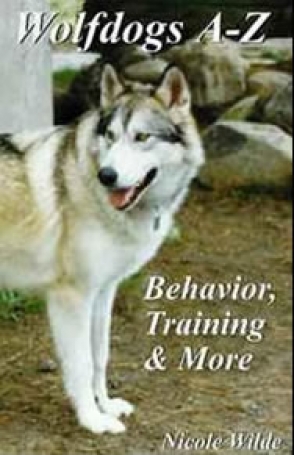
Nicole Wilde has worked with wolfdog (aka wolf hybrid) rescue, education and training for over fifteen years.