
Puppy Behavior Emergency - Resource Guarding
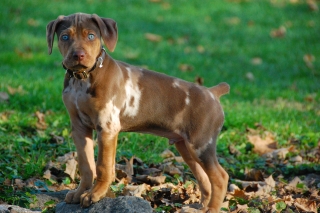
Who me

Think the puppy I’ve been posting pictures of in this series looks sweet and innocent?  You should have seen him with the very fresh raw deer leg that a friend gave us last Thursday.  I’d been feeding Chaos from Kongs and handling him while he ate, but I wasn’t doing a lot of hand feeding outside of training sessions like I should have been.  That all changed when the deer leg turned him into a snarling little demon-pup.  I promised to write about mistakes in doing this blog and there will be some today. 

We gave each of our dogs a large meaty deer bone and sat on the floor to ensure that they kept the mess on the towels we had put down.  Chaos began to grumble a little as he ate, so I began to pet him to see how he would react.  The growling intensified.  In order to assess what I was dealing, I kept petting him.  He continued to growl.  I removed my hand for a bit and he stopped.  I replaced it, and he started back up.  He soon aimed a warning bite up at my wrist.  It was completely without pressure, but it surprised me.  I jerked my hand away.  That’s always a mistake.      

I placed my hand back on Chaos’ shoulders and his snarling intensified.  He soon began to direct another bite my way.  Perhaps due to embarrassment over flinching away from a tiny puppy, I overreacted a bit.  I pushed on his shoulders to prevent a bite, and then lifted him away from the deer by the loose skin on his scruff and his back.  This was not the “scuff shake” that often passes for training.  In doing handling exercises, I’d been pulling at this loose skin and had already lifted him by it for treats several times.  Still, it was probably too harsh a reaction on my point.  I could easily have removed him in a way that wouldn’t have confirmed his suspicion that me near his precious deer leg meant trouble, but I didn’t.

Obviously, we had a behavior emergency on our hands.   Young puppies seldom show this level of aggression.  Unaddressed, this sort of thing can get really scary in a hurry.  I started working on it immediately.  I put Chaos on a sit, kept him there until he settled down and focused on me rather than the leg.  I then picked it up (yuck!) and handed it to him, but this time I didn’t let go.  I held one end while he chewed the other.  He still grumbled a bit, so I started taking big chunks of meat off my half, calling his name, and giving him the tastier meat if he looked.  Within 2 minutes, we became partners in stripping the bone rather than adversaries competing for it.  His body language was quite relaxed.  That was a good but tiny first step.   

The next day, I stuffed him a kong and held it for him while he ate.  We had a bit of grumbling, but it stopped quickly.  I had him doing sits and letting me take his kong in exchange for an even tastier treat in no time.  We did this several times before the kong was empty, with Chaos relaxed and responsive. 

Since then, I’ve been doing true hand feeding.  I fill a bowl with yummy raw food and ask him to sit.  I slowly lower the bowl to the floor, lifting it back over my head if he breaks his sit.  Once the bowl is on the floor, I sit there and hand Chaos its contents piece by piece, throwing in some obedience.  The difference in attitude between working for the food and having it to himself is phenomenal.  When he has the food to himself, he eats quickly and is very tense.  When working for me, he is relaxed and happy.    

I’m also working on letting him settle in with a bowl of kibble (because it’s low value) and then calling him away from it, whereupon I give him some even tastier meat.  This is going a bit more slowly, but we’re definitely progressing.  We’ve also been giving him bones or other chewies and teaching him to bring them to us for a treat, after which we return them.  My wife and I are both doing these exercises and we’re also conscripting every visitor to help out.  I’ve only heard one grumble since Friday, and that was when our other dog Maggie approached Chaos’ bowl when I left the room to set up a cold trial. 

We have a long way to go.  Chaos still eats quickly and looks a little tense when he has a bowl to himself.  We need to get him happily looking up from his bowl whenever we call him or approach it.  We need to do lots of cold trials.  We need to keep working on object exchanges until he’ll bring us things and drop them on command.  The key to this kind of work is lots of repetition and lots of patience.  We can’t settle for him tolerating people approaching or asking him to give something up.  He must learn to actually like it…preferably a lot.  Most importantly, we need to make sure that his welcoming attitude generalizes to include all humans.      

In my experience, resource guarding is forever.  If you don’t continue doing simple exercises to maintain the positive association between people approaching the dog with good stuff and Good Stuff for Dogs, then the behavior tends to return.  These maintenance exercises will always be a part of Chaos’ life.  His quick response to our efforts so far drives home just how important it is to start training and socializing puppies right from the start.  This is a serious problem, but an eminently manageable one right now. Too many owners would let it go on for weeks, months, or even years before seeking help.  That’s a disaster.  Nobody wants a problem like this, but if you get it the time to identify and address it always right now.

I’ll be posting more about our progress.    

 

Take Stock And Take Action

Hi Jeff,

I trust your assessment that Chaos' guarding behavior was intense, but I beg to differ with the idea that it has to be forever or is rare in a puppy.

Also, I find many otherwise normal dogs go a bit crazy with excitement the first time they get something so very yummy as real raw food. Precious! They can temporarily become a bit Gollum-like.

Guarding is a naturally adaptive behavior and just something many dogs do (especially certain personalities and breed-types that mature quickly) until we teach them there is no need to hoard around humans. This is one benefit of getting a pup, you have the opportunity to teach him to love your hand reaching in! (I know you know that, but my point is that even in young pups early object exchanges are sometimes about training and not just prevention. And the rest of my explanation is geared towards the average new pup owner more than to you specifically.)

To me it's not that different than potty training - naturally dogs don't know it's not okay to pee in the house, and naturally, don't don't understand that guarding from humans is undesirable or not to their benefit. This is one reason why early puppy handling and training is so important.

It's relatively easy to fix guarding behavior in young pups and you have the chops to do it right, I have confidence that Chaos will be fine. I just think it's important not to label him as trouble so early on. He's an intense, serious breed and doing what inherently makes sense, keeping his paws on a highly desirable, rich resource to ensure his survival in his mind.

Now is the perfect time to teach him something else and blow his little mind away when he realizes that relinquishing good stuff to you generally brings more bounty and that he'll still likely get the original "precious" back.  ;-)

Kelly Gorman Dunbar Editor, Dog Star Daily

I probably over-stated some

I probably over-stated some to hammer home how important early intervention is, Kelly, but do you see a lot of pups who will actually bite - and fairly quickly?  Chaos' bite was incredibly inhibited; moreso even than his play bites, but it still concerned me.  I expect a little grumbling, but not the snarling or the bite.  Then again, you see pups do that within their litter, so maybe it is something that can be a quick and permenent attitude change.  I hope so. 

I have some video, that I'll try to post later in the weekend.  I'd love to hear opinions.  I'm not worried about any long term implications of the behavior.  It's not altogether unexpected in this breed, but it still went shooting right up my priority list, and I think that it would be a lot for most owners to deal with.     

I just don't get asked about this very much in puppies, and when I do it tends to be a project:  an almost always successful projects with young pups, but still a real project.  It could very well be that only the owners with exceptionally troublesome dogs ever have to come back to me for anything beyond the object exchanges we teach in class.  That could definitely be skewing my perception.     

Agreed - Early Intervention Is KEY

I do understand where you are coming from regarding early intervention, but was worried that people would see a guarding pup as abnormal and therefore do little or nothing to fix (often happens once labels are applied) rather than it being one of the many traits that can pop up in a pup that needs to be (and can be) dealt with early on.

Sometimes trainers are hyper-aware too and end up facilitating a small problem by over-treating it. I think that's one reason there are so many guarders and reactive or shy dogs these days.

Of course there is a huge range of personality types and reactions in pups, some never guard, others do to varying degrees. I have seen plenty o'pups that take holding on to valuable items very seriously, epecially the first time they have something new and truly valuable. Rotties, Golden Retrievers, and many working-bred dogs do this as well as some of the early-to-mature breeds as well. In working dogs it's even a desirable trait in some cases. A Catahoulas got to be driven to suceed in the face of adversity and willing to hold on no matter what!

As you say above, many pups do this kind of thing within their litter and sometimes they transfer their behavior to humans initially.

I think you don't see it so much in class because often it's already been (intentionally or unintentionally) dealt with by the pup's family by the time they get to class at 12 weeks of age. Often it doesn't take much to get it to stop, so you never see a problem. And the object exchanges practiced in class will help the majority of them too. I agree that if they are still having a problem by the time they're in class it's because it's a more intense instinct on the part of that particular dog and therefore will need more work than most to modify.

Perhaps, the type of dogs likely to resource guard are already going to experienced homes in many cases. Not many inexperienced families have Catahoulas, Dutch Shepherds, or the driviest pup in the litter of any breed.

Kelly Gorman Dunbar Editor, Dog Star Daily

Just one point.

Chaos was RAW fed from his first solid meal, so it was not a new taste that was inspiring his behavior.

Resource guarding is quite common in Catahoulas; his mom took some convincing before she came to the place where she will relinquish things she ought not have.

We are really looking forward to watching you encounter, deal with and vanquish all the little quirks with which our dogs come equipped.

This is so interesting.

I'm so glad you're posting about your new puppy because it's just fascinating to me. At this early age, this resource guarding almost has to be a breed trait or at least genetic for this particular dog, right? I'm interested in this because I've been thinking a lot about the genetic differences in behavior and training dogs. 

At first, I thought I was doing a horrible job with my puppy, and later I realized I had a lot to learn, but also that the behaviors were typical of dachshunds, especially dachshunds that weren't purposefully bred. Then the question became not how do I handle an issue, but how do I handle the issue for a dachshund.

Interestingly this post reminded me that I don't remember resource guarding being an issues for Kody or his brother. In fact, when his brother would stay with us, one would eat the kibble out of a bowl for a few seconds, then let the other one eat, and they'd switch back and forth like that until they were done. Even at the time, I was amazed they had just done this themselves. Although for all I know that could be normal dog behavior.

Later when they had a brief meeting with their sister, she had become quite a resource guarder, but I think it was learned from being a tiny mini living with four other larger dachshunds under less that perfect conditions. (Suffice it to say that the story of my dog and his dog family is a bit complex.)

Now, if we talk about barking at strangers (or anything different), that is definitely bred into a dachshund I think. That's one Kody and I really had to work on.

__________
doxienews.com

remembering the gift of growling


I agree that resource guarding one thing or another is more the norm than not from what I've learned, worked with and observed in puppy classes. 

I learnt 8yrs ago with my first beagle Daizy how much fun and important playing those "trade you" or "share" games can be.  She was red-flagged from the first puppy class.  All the games played have paid off as she still loves to be involved when I play those games with fosters.

I think Pat Miller wrote an article years ago on the "Gift of Growling" for Whole Dog Journal

http://www.whole-dog-journal.com/issues/8_10/features/15753-1.html

which is absolutely priceless.  I love handing that out.

I don't take for granted that any dog, or human for that matter :) would love to share everything 100% of the time. With fosters and or privates, teaching " touch", "take it", "give", and "trade you" are some of the first things I cover. 

I learnt my lesson with my boyfriend's pug ..who lunged, punctured and shook my hand and did not release (I had to pry his jaw apart while trying to sound calm) when I went to throw a piece of chicken into his food bowl, to always to start with a blank slate.  Assume nothing.  Start from scratch, that way, it's understood from day one.

I'm so happy that your little pal has reminded you of how important a life lesson this is to teach!  He's one lucky duck that he has you doing everything positive to reframe the picture for him.

Can't wait to hear what's next!  I've learnt something new with each puppy, foster and private that I've worked with which makes me grow as a person and fills up my training tickle trunk with new games to play in the name of training.


happy-houndz.blogspot.com cheers, kate

Early biting and growling

I had a client give up her puppy over growling and biting over a rawhide. I knew we could reshape the puppy response but it scared her so much she wanted to give him up and nothing I said could change her. He was a black and tan coonhound just under 4 months. I actually took him which I don't make a habit of and fostered him till we could find him a better home. In the six weeks I had with him, I started drop it, leave it, take it with toys  ALOT. After a week or so, I tried the rawhide and he dropped it immediately with this big coonhound grin. I'm not really in favor of rawhide but since this was his "treasured" item I wanted to try it. Long story short-he went to a great home with another coonhound and as far as I know is living happily in coonhound bliss.


Lydia McCarthy Playful Pooches and Parents Dog Training 513-939-dogs

I would really like to do a

I would really like to do a structured follow-up with some of these dogs.  My experience with primarily adult dog clients with resource guarding issues is that if maintenance exercises aren't part of the dog's life going forward, the behavior tends to return.  Of all human-directed aggression, my wife and I have our highest success rates by far with resource guarders, but they also seem to be the ones who are most likely to call back a year or two later with a problem that has resurfaced.  I haven't tracked this, but it's a clear enough pattern that you can't miss it.  I wouldn't be at all surprised to discover that guarding is less likely to recur in puppies, but it would be cool to study.   

Very good points, Kelly.  I

Very good points, Kelly.  I certainly wouldn't anyone to see this kind of behavior in a puppy as a reason to give up on the pup.  Quite the opposite.  Whenever I talk to vets I stress that most of the difficult cases they refer to me could have been more or less solved in a couple of weeks if they'd been identified and addressed in puppy class. 

guarding can disappear

My dog was a rescue at 8 months and had some nipping and guarding behaviours. However, he now has the most amazing bite inhibition and actually prefers me to be with him when he is eating something good. Only today I had a reflection - I gave him one of his favourite treats and went into another room. He brought it in to me. I ended up laying next to him. He'd have a chew then I would take it from him and give it back. He wagged his tail the whole time. If I got up and left he came and got me!

Whilst 10 years ago (when I got him) I was a novice trainer,  I somehow got bite inhibition and guarding exercises right - basically doing what Dr Dunbar suggests and that everyone can read on this website.

I have another dog which I have also done these exercises with - who has a very very high food drive. Interestingly, he will allow me to take food - even prized meaty bones off him - however, other people (who he doesn't know so well) have sometimes got a warning growl. His drive for food (he is also a rescue but one that had to battle hard for food) is the strongest I have seen on a dog - so it stands to reason he may have issues with strangers.

I have done resource guarding exercises with many other dogs I've come across and am often suprised at how quickly you can improve their behaviour. I do believe individual temperament does come into it - but that doesn't mean it isn't curable.

So, in my opinion doing exercises like these (even with a dog and not a puppy) sets them up for life. Both my dogs prefer me to be around when they are eating (its a positive association still after all these years). I don't do "maintenance exercises" so to speak - although I may sometimes pop an extra treat in their food bowl etc.

My five cents!

Extreme Resource Guarding

Just had a new client call me today with a 14 week old puppy-Aussie/cattledog mix with extreme guarding it sounds like. Guards his food, toys and even a mayo jar the owner dropped on the floor. Growls and attempts to bite. He has bitten her once and attempted to bite a neighbor. Was found in dumpster at 8weeks with 3 sisters.  Owner does not want to give up on him yet but needs my immediate help. I guess it happens alot with rescue pups. Not sure but guess I get with her asap.

Lydia McCarthy Playful Pooches and Parents Dog Training 513-939-dogs

ASAP for sure Lydia. 

ASAP for sure Lydia.  That's a lot of guarding for so young a pup, but resource guarding is usually pretty straight-forward.  I really like the protocols in Jean Donaldson's "Mine!"  The work is fairly easy, but tedious.  I list triggers and exercises in my behavior mod plans, but then I ask clients to create a spreadsheet to track their progress.  It's similar to what you might use at the gym.  I encourage them to send it to me every few days and let me know any time that they hit a wall.  I don't do it for them.  I want them thinking through the process to apply the principles I teach them.  I don't nag them to send me the sheet either, but the ones who do it usually make very rapid progress. 

Even the ones who don't do the spreadsheet usually make wonderful progress if they make any real effort to do the work, but they do tend to progress more slowly. 

great that you can work on it NOW

Hi Jeff,

Love hearing about your puppy experiences.  I remember when I first brought my Golden Charlie home.  He had such bad food bowl aggression, I hand fed ever piece of kibble for 5 months, plus food bowl exercises.  Had he gone to any one other than me, I am certain that he would have been in danger in the hands of the average handler.

He did extremely well, trading, dropping, leave it, all the cues and what I thought were all the top notch.  Until the day I got home form the butcher with a fresh bone for both of my dogs.  Heidi who is a year older(labx) never guarded anything in her life, she backs up from the bowl when the cat approaches, lol.  I called the dogs to come, sit, down, watch me, they earned the bone and away they went into the back yard for their chew-travaganza!  Five minutes later I went into the yard to see how they were doing, I walked 5 feet away from Charlie and looked at him, my beautiful sweet 8 month old Golden was shaking and growling like a rabid beast. UHOH.  I went back in the house, rolled up the news paper and hit myself over the head and found something to trade up for this instance.  Once I had traded and got control of Charlie, we went back into training mode, him on leash, tethered to me, and me sharing and teaching him I am the best thief in the world, returning all his treasures for even better ones.

The proof came a couple of months later, while on an off leash walk, I spotted Charlie with something large and foreign in his mouth.  I called him to come, "show mamma whatcha got" drop it, leave it, and he did so happily.  I looked down to see a rabbit head (we live in the country, lots of coyotes) you really can't get more high value than that.  That was such a great moment for me and Charlie.  All the hard work had paid off. 

As trainers, we need to advise our clients that guarding is natural, do the exercises now, stay calm, and be sure to have control of the situation, and their emotions.  Week 3 in our puppy class we learn "drop it", week 4 the pigs ears come out.  I teach them how to share with their dogs, how to object exchange, and how to handle the situation.  I also tell them that this behavior can pop up any where in the dogs life, I've showed them how to change it, and to continue to have the dog earn, share, and drop for everything it values. 

I know first hand how scary it is to see your little angel of puppy fluff, look at you with rage.  It's not pretty, but it can be changed, anytime in the dogs life that it exhibits this behavior.

Best of luck with everything, I can't wait to hear more about raw feed puppies, all my dogs are now switched to raw, but I have never had a puppy feed raw right from day one.  Perhaps you could blog about that!!  Thanks for sharing,

Shannon Brennan


New puppy - HELP!

My husband and I got our lab puppy on Friday (9 weeks) and we're having a few issues with her.  She'll sleep in her crate just fine, but I can't get her to eat or relax in her crate. She'll chew her Kongs a little bit on the floor in the kitchen, and she'll settle down in the kitchen (as long as I'm in the same room), but she won't settle down just in her crate.  I'm a little nervous because I have to leave her for 3 hours today and I don't have a baby gate set up for a "long-term" confinement area yet. 

Also, one thing I wasn't prepared for was the anxiety and fear she has.  She's extremely affectionate and loves to crawl into our laps and fall asleep, but isn't great at falling asleep without being actually on us.  She's terrified of cars, and we live by a very busy street.  I took her out on a walk and she was trembling with fear and wouldn't move.  She wouldn't calm down in her crate after that either. She seems very uneasy most of the time.

We're pretty exhausted, please tell us it gets better!

Lots of hope

Hi Erika.  What you need is to get into a good puppy class with a trainer who really knows her stuff.  Puppies this age have such malleable little brains, and most problems can be dealt with far more easily than they could with a dog even a few months older.  Shy puppies need to be brought along with extra care sometimes, but you'd be amazed by how often puppies who spend their first night of class cowering under a chair are prancing around like they own the place by week 3. 

There's some great content here on DSD on how to choose a puppy class.  You might want to start your search at www.apdt.com.  Good luck, and run - don't walk - to that puppy class!

erikaskis while you search for apdt trainer, some resources


While searching for a puppy class there are tons of puppy videos on this site & Dr. Ian Dunbar's post on puppy classes.

Using the search window on the top right corner keying "puppy classes"   or this link   http://www.dogstardaily.com/training/puppy-classes       brings up some good info why they are essential for the puppies.  It will bring up on the left hand side all the books related and then the middle is Dr. Ian Dunbar's post , then the right hand side of the page all the video's you can watch on puppy classes   ie.....   http://www.dogstardaily.com/videos/puppy-class-play-shy-pups-amp-growly-...

Dr. Ian Dunbar has blueprints for separation anxiety as downloadable as well.  I love all his books and video's.

My favourite dvd to help with crating is Susan Garrett's "Crate games" dvd.  

I love Patricia McConnell's books as well  www.patriciamcconnell.com

Pat Miller has an excellent puppy book too.

Having a good positive reinforcement (no rough handling, yanking, spanking stuff) puppy class to go to every week was a godsend for me.  My support group!  We all shared many of the same challenges one week or the other.  Puppies are sponges so sometimes all you need is the know how to reframe the picture for the pup and the next thing you'll notice that you pup figures out...hey, when my owners leave...I can dig into my 5 yummy chicken, cheese kongs..and then crash in my cozy kennel so I'm well rested by the time they come back.  Or that loud noises make liver brownies rain from the sky...hang in there!  It'll get better once you get into a class or even have a private lesson to get you started.

happy-houndz.blogspot.com

cheers, kate

who teaches who?

I have to share - after reading this resource guarding post with interest I then thought of another behaviour my dog has... and I've seen/heard similar stories from others...

If another dog has an item my dog really wants, he takes something else - like a different toy - often their favourite - over to them and shows them how fun it is. Drops it near the other dog, and then waits until they relinquish the first item for the new one - then my dog takes the first toy for himself. Isn't this how we train them to give up something valuable - by trading it? Who learnt from who?

New puppy

Yeah I've read pretty much everything I can get my hands on regarding puppy training.  The only thing I wasn't expecting was such a scaredy-dog! She freaks when she is not in the room with us.  The kong doesn't seem to resolve her anxiety much at all, which I also wasn't expecting.  She'll play with her kong for about 10 seconds, then whine.  We've resorted to letting her play with her kong by herself and coming back in and praising her every 30 seconds.  The longest it lasted without her whining was 2 minutes. 

How can I get her to calm down on her own?  When she's tired she plays and bites everything within reach, but will only settle down if she's physically on us (on our feet or laps). 

Raw Food vs. Kibble

I have to say that since rearing pups on raw vs kibble, this issue of food guarding has been a "bone of contention" so to say :o)

I've never had, even in litters of ten, problems with pups guarding a bowl of kibble food or having problems eating in a close area with eachother, but introduce raw food at 4 weeks old and watch those little puppies turn into tiny, snarling carnivores!!They will grab pieces of meat or chicken necks and run and hide to eat their prize. When they are fed kibble from a bowl it's a totally different scene.

I always "warn" new owners who have never fed raw before that this is the ONLY drawback to feeding puppies raw - you need to work extra hard at this food guarding. I don't think it's breed related, although I've never raised any other type of breed. I think it is all instinct. Watching young pups eat raw is no different then watching a pack of wolf pups eat raw :o)

It takes a lot more work and training on the part of the owner to make them eat nicely and politely. Even now with 4 adult dogs fed raw, if I am handing them something large, like a chicken back, that is not eaten from a bowl, I do remind them to be nice. It is pure instinct to grab that hunk of meat so I do remind them still.

I would have done the same thing with a snarling, biting puppy - the pick-up by the scruff of the neck, that always get their attention! LOL

you just wait..your puppy is a superstar :)

Erikaskis

My first puppy Crazy Daizy the party girl, who I consider a Border Collie in a Beagle suit taught me  how much mental stimulation tuckers a puppy out as much as physical stimulation does.

Also...I spent a ton of my paycheck on long and thick beef chews and raw knuckle bones which also tucker them out.  Chewing releases endorphins and like chemicals which soothes them...zzzzz's

I also have noticed that the smarter (or more anxiety they have), the more you need to work with them teaching them cues and party tricks.  On a NILF program,  my Beagle learnt all her puppy class cues within a couple weeks, and then we got extra homework to keep her brain stimulated.

ie. teach touch, take it, give, drop, find it, give paw (paw target), trade, bark, quiet, shadow walking, swing around to the walking side, give paw, sit pretty, bang play dead, high ten, circle...let your puppy's interest spark your imagination and go with the flow and play shaping games.

I also made retrieving a priority to teach (touch, take it, give, trade, drop, find it) as I could hide things wrapped in towels for her to find, unwrap, then eat her popcicle kong which took longer than just handing it to her. Or play fetch or "find it".

For kongs we did half wet / half dry and froze them so it took longer to get through ( I've since switched to raw and still do the same). More than one, I had not kidding 5 different shapes and sizes and she worked for each of them, I stuffed with toast with peanut butter & banana (it takes longer to get out then just peanut butter), cheese, liver brownies, you name it, pretty much everything except dog cookies which truthfully do not have much taste (have you tried them?)

I am forever grateful for her.  It was a tough year of learning curve for me, but she has brought sooo much happiness into my life, and energy,  that I am still amazed at what we continue to learn together.  The things I've learnt I've been able to share with others and she actually also loves being involved in training when I bring fosters home.  I recently shaped playing indoor soccer... she's 8yrs old and still loves to learn!

She also had a huge dose of separation anxiety (had to shower with curtain open at first), and was a scardy cat of people and loud noises as well.  It all worked itself out in time, the more confidence you build by teaching them to associate those scary things with rewards, the faster they look to new challenges.  Also very important lesson she taught me was to stop and go at a pace where she was comfortable with.  It wasn't all about me anymore, it was all about taking the time to shape this bundle of fur that counted on me to show her that this big noisy, smelly, world with unfamilliar things that looked a lot different than her first few months living with her littermates and mom were wonderous and not such a scary place to be afterall.

Kelly  Gorman Dunbar had a great blog about being a tourist in Italy...not knowing the language, cultural differences, and feeling overwhelmed at times.  I think of the same thing for puppies and foster dogs who have not had the opportunity to explore and discover that this world is full of wierd and wonderful things, and they can count on you to teach them at a pace that they're not overwhelmed that it's actually a lot of fun.  

As Jeff Silverman said...."Run" ...and find a puppy class...you'll be with those who can share your pain :)

Personally I love puppies and all their antics... although exhausting at times...just like everything in life, you'll get out what you put in to the relationship.

Wishing you lots of luck and regarding separation anxiety, Patricia McConnell's "I'll be home soon book" is priceless.  

happy-houndz.blogspot.com

cheers, kate

jeff silvermans chaos

Hope the absence of further blogs about Prof Chaos is not cos there is chaos abounding Jeff.  Have really enjoyed the blogs so far.  Looking forward to more when you have the time.   ausie moyapoya

Frantic/rabid behavior

I identified with Playfulpooches' post about a frantic/rabid coonhound.  That's our little Sadie to a "T".  She's a Walker coon hound/boxer mix.  She's 10 weeks, and we're following Dr. Dunbar's books as closely as possible, but we have had some real trouble with her totally spazing out on us.  I have scars on my hands from our training her to inhibit her bite and have had to resort to using a water squirter because my hands were actually swelling and raw.  I know they get more active at dawn and dusk, but she gets so frantic that we have to hold her in a position that keeps her from ripping a hole in our flesh, as we take her to her crate for a "time out" as our vet told us to do.  The problem I could use help with is this frantic/rabid behavior.  I'm not ready to get rid of her at all, but it is very scary because if she wasn't so tiny, I would absolutely be afraid of her growling, panting, bark/yiping, striking out and trying to really dig into our skin.  She's like a little Tazmanian devil.

I've spoken with a professional trainer that is a friend of a friend, and he described teaching her to "settle" but its really slow going. 

Help?

re: frantic/rabid...see Jeff's other post


While you wait for a reply, Jeff posted this blog previously where he provides lots of interesting tips.  Have you had a read through this one while you wait for his reply?

http://www.dogstardaily.com/blogs/week-chaos-dog-trainer-gets-puppy


ps.  I wore long sleeve thick shirts, jeans and I should have added gloves ;) thinking back with my Beagle puppy... until I went to puppy class and was loaded up with great info to work through the insanity. 

 She's bright, and learned quickly HOW to interact with us delicate humans....best of luck!

cheers,


happy-houndz.blogspot.com cheers, kate

frantic puppy

It's hard to know exactly what you're dealing with without seeing it, Bethybb.  At what times does the frantic behavior occur?  Is it only when you restrain her?  Is it only for short periods of puppy "zoomies" early and late in the day?  Does she play fine for a while and then fall apart?

If you have access to a decent trainer anywhere near you, your best bet is to definitely get into a puppy class now and work with someone who will know what he's seeing and be able to help you without guess work. 

This could be a run of the mill "puppy fit" in which a puppy who doesn't want to be restrained squirms and goes crazy until she's let down.  I usually handle these by holding the dog still until she settles and then immediately letting go.  No yelling, grabbing, giving commands or anything.  I just go silent and hold the pup still until I get calm.  Calm earns the dog freedom.  Letting go during the fit, on the other had, reinforces the fit and tends to make the next one even worse.  

Chaos had some huge fits when we brought him home.  This first was well over 5 minutes before he gave up.  I used the method of letting him go when he calmed down, and over time I slowly lengthened the period of calm required from 2 seconds to 30.  It took about 2 weeks for the fits to stop completely, and I still regularly scoop him up and cradle him in my arms to keep the lesson fresh.  There are a lot of other things that you can do to teach a dog to yield to pressure and accept restraint, but I can't talk you through them in this forum.  Face-to-face coaching is the way to learn them if it's an option.   

Another possibility is that you're letting pup be active for too long.  A lot of puppies - especially, but not only, in houses with young kids - won't go lie down on their own when they get tired.  Tired puppies tend to be very obnoxious.  If your pup tends to interact nicely most of the time, only to occasionally turn into an incorrigible shark attack machine, pay attention to how long she's been awake.  My basic rule of thumb is that if a puppy hasn't gone to lie down of her own volition for 2 hours, then it's time to put her in the crate for a chewey. 

Times vary from dog to dog, but if you pay attention you may notice a pattern to when your puppy falls apart.  If it tends to happen at 90 minutes, put her in the crate at 75 minutes.

It's also possible that you have a dog at risk of developing serious resource guarding of her own body.  Again, the best way to find out is to see a professional ASAP.  Even if that's what you're dealing with, fixing should be easy at this age with the right guidance.       

Thanks for the feedback!

I do hold her until she settles down, before letting her go, and I'd say she gets this way mostly when she gets overstimulated.  She doesn't seem to be guarding herself or her food, but rather isn't getting her way (wants to play too aggressively) so just sort of escalates.  Yesterday we had a friend over that was doing what most people do with puppies, ramp them up.  I did interject, show her my hands, and describe how we were trying to train her, but Sadie was already about to have a meltdown and I did in fact hold her until calm, then gave her a break in her crate.  It really wasn't her fault, that time.  Its definitely more obvious at bedtime. 

Once the snow goes away we hope to get a lot more outdoor activity for her, which should help.  Thanks so much for your feedback, and we are definitely looking for good puppy classes/training groups.

Help me and my crazy lady

I've had my shelter dog for about three and a half years. She was about a year old when I adopted her and throughout the years, we've been through more than a couple episodes of dog aggression and resource guarding. She's attacked several other dogs and is now closely monitored and kept pretty separate from other dogs (caught in the Catch-22 of not being able to find any dog owners willing to have their pups help socialize mine), and her resource guarding is always lurking. She's food aggressive and territorial over toys, which I worry she will never be completely cured of. After her latest episode, we removed her food bowl and have returned to a strict regimen of hand feeding. I'm struggling though, because we are expecting a baby in June, and I worry that I just won't be able to handle the constant maintenance required to work with the dog and her always lingering issues. And of course, I'm scared for the days when my baby becomes a toddler. I feel like re-homing her will be impossible, and my choices are either to work and deal with this or have her put to sleep. The thought of putting her to sleep obviously upsets me deeply. I need words of guidance, reassurance and encouragement here, but also advice. You can either respond here or email me at meliseeta@mac.com

If you've got a resource

If you've got a resource guarding dog and are expecting a baby, you need to make addressing it a priority ASAP.  The good news is that if I was going to pick an aggression problem to have in a dog, resource guarding would be it. With our clients, it's the type of aggression with which we have the highest success rate by a considerable margin. It's work though, and you'll likely do better if you start before the baby comes. 

Four to six weeks of focus can take you a long way towards putting most resource guarding problems behind you.  Maintenance exercises are generally pretty easy.  They're things that work into your routine interactions with your dog that don't really take any time at all.   

What I think that you need most is an educated assessment of the severity of your dog's guarding and the risk that it might pose when your child becomes mobile.  Your best bet is to consult a professional who's experienced with this problem and can give you those answers.  When there are children involved, I always go to a client's home so that I can see the layout. 

I'd ask a few questions up front.  Has your dog actually bitten while guarding toys or food?  How frequently do you have episodes?  How many different things does your dog guard?  Those are just some starter questions.  A professional working with you would want to take a full history.  With you expecting a baby so soon, I wouldn't really recommend a do-it-yourself approach, but if you want to read up on how to address these kinds of issues Jean Donaldson's book "Mine!" is an excellent resource.     

Dog aggression - when it's serious - is much trickier than resource guarding, but people often overestimate the seriousness.  The big way to evaluate seriousness is fight-to-bite ratio.  If you're getting a lot of scuffles with nothing but noise and spit, then your problem may not be that bad at all.  Again, though, a professional evaluation is your best bet. 

You can find people who can help you at www.apdt.com or www.iaabc.com

Dog Star Daily® Recomended Products:

  • My Dog Can Do That!
    My Dog Can Do That!
     
  • Every Picture Tells A Story: an Educational Aid for Children to Explore the Language of Dogs (VIDEO)
    Every Picture Tells A Story: an Educational Aid for Children to Explore the Language of Dogs (VIDEO)
     
  • Dog Aggression: Fighting (VIDEO)
    Dog Aggression: Fighting (VIDEO)
     
  • Training Dogs With Dunbar (VIDEO)
    Training Dogs With Dunbar (VIDEO)