








User warning: The following module is missing from the file system: recaptcha. For information about how to fix this, see the documentation page. in _drupal_trigger_error_with_delayed_logging() (line 1184 of includes/bootstrap.inc).
The Essential Puppy Training Course is HERE!
We are thrilled to announce the release of our all-new Essential Puppy Training Course.
We've been hard at work developing this course for the past year and are extremely excited about it. So to
The 2 Most Common Mistakes Dog Owners Make (and How to Fix Them)
There are a couple of mistakes that dog owners frequently make which are simple to fix and have the potential to dramatically improve a dog's behavior. These mistakes are a common cause of dog
All Puppies Deserve a FIRST Chance — an EDUCATION!
Owners and their new puppies are still getting the short end of the stick. Dog problems are invariably blamed on “irresponsible dog owners” BUT they are simply at a loss for what to do, and, no...
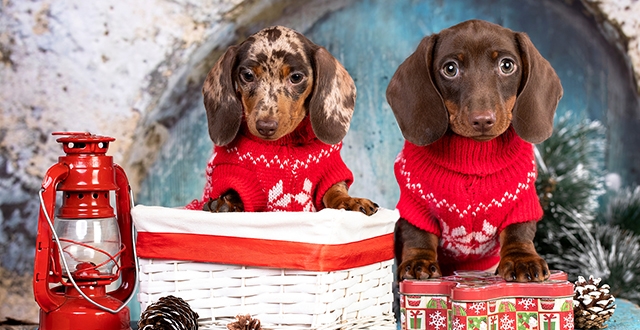
Getting a Puppy Over the Holidays
The holidays can be a wonderful time to add a puppy or dog to your family, but the holidays also present plenty of challenges. With a little preparation and thought you can get a holiday puppy and
Help Every Puppy Get the Education They Deserve
Please, please, PLEASE help us make sure every new puppy gets the education they desperately need and deserve this holiday season.
Please tell everyone you know about our 2 free puppy training...
New Free Course – Six Simple Steps to Solve Your Dog's Behavior Problems
We've just published a new FREE course on Dunbar Academy called Six Simple Steps to Solve Your Dog's Behavior Problems.
This course is filled with short videos and downloadable documents that provide
Introductory montage for Dr. Ian Dunbar’s new Adult Dog Training video, which demonstrates a variety of exercises that are specifically targeted for adolescent and adult dogs
Puppies love to play, but it’s very important that everyone (especially children) enforces strict rules about physical play. If you want to have control over your adult dog, you have to train them as a puppy.
Make your food treats tiny, and if your commands aren’t working, try it more emphatically. Use a stern tone, a hand signal or an exciting lure. But if you need to use a food treat to lure them at this point, then they shouldn’t receive it as a reward.
There are approximately 1 million dog bites each year in the United States. Between 60 and 70% of them are to children. (See this.) That's a pretty staggering statistic.
Why are a majority of bites to children? In 2007, three researchers attempted to address that question. They examined the records from three years of bite cases involving children from the Behavior Clinic of the Matthew J Ryan Veterinary Hospital of the University of Pennsylvania. They looked at 111 cases. (There were actually 145 cases, but they could not determine the age of the children in 34 of them so they were not included.) A few of the cases were repeat offenders; there were only 103 unique dogs in the study.
The numbers that grabbed my attention and lead me to purchase the paper were these:
Recently, my dog Lila and I encountered a group of three Australian Shepherds, out for a walk in the park with a man and woman. As we approached, I thought I noted signs of discomfort in the humans, and, I admit, I have my own expectations about the stability of Aussies. The group appeared to move off when we entered their visual distance, but, apart from some leash-pulling, not the total chaos I expected. I decided to ascribe my feeling to my own stereotypes about the breed.
As we continued our walks in opposite directions, and the trail is a circuit, we re-encountered each other again a short time later. Unlike the intial moment, where the angle of approach put our dogs facing 180 degrees away from each other, this approach put us nose to nose.
Last night I spoke to the esteemed Ken McCort on my podcast, Regarding Rover. It was a breath of fresh air and a sigh of relief to hear him say that we should all relax, not just a little, and start being friends with our dogs instead of trying to be pack leaders.
I wanted to talk to Ken about this because there is so much misinformation, competing opinion and downright crap out there about dogs and how we should train them. Some so-called experts drivel on about wolves and wolf pack behavior without so much as ever seeing an actual pack of wolves. Instead, they repeat statements that have been repeated for years, without knowing where those statements came from or bothering to find out what has been learned since those statements were made. The worst of them go on to elaborate, exaggerate and extrapolate these statements until they are nearly unrecognizable.