







Error message

User warning: The following module is missing from the file system: recaptcha. For information about how to fix this, see the documentation page. in _drupal_trigger_error_with_delayed_logging() (line 1184 of includes/bootstrap.inc).

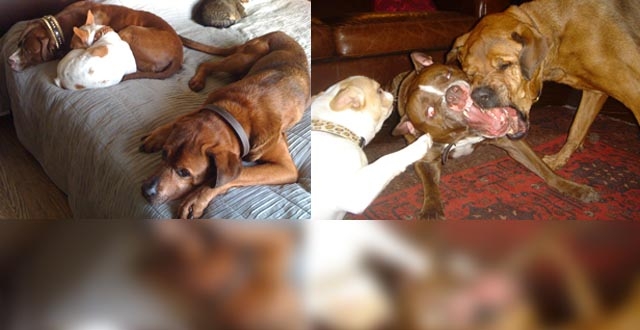
Resolving Dog-Dog Reactivity

FOR A LIMITED TIME Watch the all-new Dunbar Academy Dog-Dog Reactivity webinar for FREE, where Dr. Ian Dunbar explains the common causes of reactivity and how to resolve reactivity using 10 easy and...

The 2 Most Common Mistakes Dog Owners Make (and How to Fix Them)

There are a couple of mistakes that dog owners frequently make which are simple to fix and have the potential to dramatically improve a dog's behavior. These mistakes are a common cause of dog

All Puppies Deserve a FIRST Chance — an EDUCATION!

Owners and their new puppies are still getting the short end of the stick. Dog problems are invariably blamed on “irresponsible dog owners” BUT they are simply at a loss for what to do, and, no...

New Free Course – Six Simple Steps to Solve Your Dog's Behavior Problems

We've just published a new FREE course on Dunbar Academy called Six Simple Steps to Solve Your Dog's Behavior Problems. This course is filled with short videos and downloadable documents that provide

Puppies and Shelter Dogs: Two Sides of the Same Coin

I am a dog trainer and I lead a double life. Of sorts. Behaviorally speaking. I am the Director of SIRIUS Puppy Training, a San Francisco Bay Area puppy training school. Our mission is to teach new...

Help Every Puppy Get the Education They Deserve

Please, please, PLEASE help us make sure every new puppy gets the education they desperately need and deserve this holiday season.  Please tell everyone you know about our 2 free puppy training...

Three Very Important Words

I attended my first dog training conference in early 2000. I’d been teaching obedience with a local club for a few years, had a read a ton of books, belonged to more training listservs than I could count, and had rehabilitated a couple of fosters and a dog I adopted for aggression issues. I fancied myself quite the expert on dog behavior, and I wasn’t shy about sharing my opinions. I went to the conference because I couldn’t make any progress with another aggressive dog that I was working with. Nobody local could help me, so I sought the advice of people whose books I’d been reading.

 
DogFenceWait copy.jpg

Boredom Buster

Winter's fierce snows have taken over to the point of absurdity and my limited time for my precious walks have been taken over by incessant shoveling. Here's how I deal with the cabin fever that starts to hit when I'm exhausted from my labor and the dogs are just cold watching me wondering why we're staying by home base!

 
scan0001.jpg

Consequences and Repercussions

Even though we spend a lot of time studying, discussing, and dissecting learning theory and various training methods, the fact of the matter is, training dogs really isn't rocket science. It would be ludicrous to suggest that any one, specific training method is the only way or even the right way to train in terms of getting a dog to perform a certain behavior. However it would be equally ludicrous to suggest that the methods we use and manner in which we get a dog to perform a behavior is not going to have consequences and repercussions, not only to the dog, but to the relationship we have with him. I've always considered it my good fortune to have experienced the progression of dog training and to have utilized many different methods and tools.

 
Hugo Stretch.jpg

Interpretive Dance

Lots of debate out there about how best to train dogs. Of course there is no one way to train all dogs, or even one way to train one dog. There is no magic formula that will work every time, like clockwork. Dogs are living, breathing, thinking creatures and we form relationships with them, which adds to the dynamic as well. Even the long and well-practiced methods of a seasoned trainer will need adjustments for each individual trainee in each individual context. This is the art of dog training in my opinion and while some people may instinctively be better at it than others, years of practice will help those less naturally inclined, because dog training is also a skill.

 
DSC00152.JPG

Living With Noodles

I’ve had the cutest little Cocker puppy living with me for the past two weeks. Looking at her fills most people with marshmallow thoughts and pillow soft emotions. She’s the kind of puppy you just want to hug and cuddle and pet and hold and kiss and hug and love, love, love.

Two weeks ago, you wouldn’t have been able to do that. Today, you have a much better chance.

Noodles is just reaching the age of 5 months and was afraid of just about everything when she came to stay with me. Her reaction to other dogs was a high-pitched scream, teeth and snapping. Her reaction to people was barking and backing up. The first time I tried to remove a piece of paper from her mouth, I ended up with two tiny, but painful, puppy teeth punctures in my thumb.


Choosing Abundance

Time and again it’s been suggested that positive training leans toward a one size fits all approach. I’m not sure where this idea comes from, but suspect that some feel being unwilling to use certain methods or tools means that a trainer is limited to only one way of doing things.

The truth is, throwing out choke chains, severe punishments, prong collars, shock collars and a whole host of other methods will still leave a trainer with plenty of options. It is not the equivalent of throwing the baby out with the bathwater. It’s simply a matter of not bathing the baby in the same old dirty water out of reluctance to refill the tub.


Good Behavior is Free, Yet Hugely Unappreciated

Perhaps our biggest human foible is that we take the good for granted and moan and groan at the bad. This is most certainly true in dog training. We ignore dogs when they are quiet, only to shout back whenever they bark. We ignore friendly, or non-eventful, greetings, only to reprimand our dogs for growling. We customarily ignore dogs when they walk calmly on leash, only to become frustrated when they pull.

However, when we representatively time-sample behavior, we find that most dogs behave wonderfully most of the time and only very infrequently behave inappropriately or unacceptably. We let the good go by and instead, focus on, and highlight, the bad.

One of the easiest ways to change a dog’s personality (and hence behavior) is to reward the dog for good behavior on a regular basis – to make a point of catching the dog in the act of doing something right, and conveying our heartfelt approval.

 
A Cheetah.JPG

Am I On The Right Website?

Usually the saying goes that something “has gone to the dogs”. However, at Dog Star Daily we’ve clearly already done that, and some of you may be concerned that we’ve instead “gone away from the dogs” lately, with our recent posts about various farm animals and a few past posts about cats.

Rest assured, we won’t be changing our site name to Donkey Star Daily or The Monthly Moo. However, occasionally it is helpful to both reach beyond our comfort zone and look to other species from time to time to get a fresh perspective on dog training.

We people think we really know dogs, right?  Yet sometimes things can still get lost in translation. Familiarity and comfort can lead to complacency, and from there our habits may drift even further down the river of effort, away from the land of learning and growth towards the state of stagnancy.

 
SIRIUS_star_small.jpg

Dr. Dunbar Answers The Top F.A.Qs

We asked new puppy owners from over 25 SIRIUS® puppy classes to list their most burning questions about raising a puppy. Below Dr. Dunbar answers the most frequently asked questions from our survey in rank order.  

 
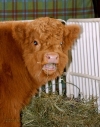
funnycalfwtmk0000.jpg

That May Not Be So Cute When He Grows Up

“That may not be so cute when he’s a big boy!”  Wish I had a dollar for every time I’ve said that phrase.  And whether it was a bundle of fluff Bichon pup or an all-legs-all-the-time baby Great Dane, the caution was always worth heeding.  Because baby animals grow up to be adult animals.

Between my own dogs and helping others with theirs, a lot of puppies have grown up around or with me.  Storm, the newest baby in the house, is putting a new twist on raising a youngster and being careful about what he learns now when he’s little.

When he was born, Storm was about 60 pounds.  You read that right – about 60 pounds.  At birth.  Storm is a Scottish Highland calf, a sturdy baby bull with fantastic eyelashes and red shaggy fur.  At the moment, he’s laying a few feet away.  He is the official House Calf.  


Pages

Subscribe to Front page feed
The Behavior Problems Crash Course. Free on Dunbar Academy