







The Dog Blog

Pages

Grading?

"Grading" is a great way to keep a dog interested when you are escalating criteria (making things harder).  Frustration of a failed exercise, particularly one that used to be good enough, is difficult to deal with, and can even make some dogs shut down.

And, in contrast with not coming at all, is a slow recall really such a huge failure, in the big scheme of things?

I use two types of grading.  One is with kibble.  I grade every repetition on a scale of 1 - 20.  That number tells me how many pieces of kibble to feed -- one at a time lets the dog "account" exactly how many pieces.

For example, a super-sprinting, right dead on to me, slamming into a sit recall -- well, that's definitely a 20.  If I have to distract you a million times before you get to me, that's a 1.  And there is a lot of variation in between.  Do I lay out an exact list?  Nah.  I just eyeball it. 

 
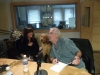
Kelly and ian Dunbar in the studio, with our dog Ethel chiming in

Ian and Kelly Dunbar on my WLS-AM On Demand show - many dog trainers set up an adversarial relationships

a wide ranging discussion, as I sat down with Kelly and Dr. Ian for about an hour....

Are trainers pre-conditioned to set clients up to be adverserial? Is it what you say or how you say it to the dog? Why you should say 'thank you' to your dog.

What about punishment? How do you know if your dog really understands what you want? Are we thinking too much? ('Give them a scalpal, and they'll dissect a kiss')

http://wlsam.com/Article.asp?id=1415731&spid=33547


I Was Right!

My class students have heard me say many times, “When your dog fails, he fails.  When your dog succeeds, he learns.”  I bring this up most often when we’re working on Stay.  My pet peeve is our human tendency to prolong the Stay if the dog is succeeding.  People take a step back, and if the dog is still staying, they take another step back.  The problem with this method is that the stepping back doesn’t stop until the dog breaks the stay, so we’re setting the dog up to fail!

I want one step back and then get that reward to the dog before he moves!  It is the responsibility of the handler to make sure the dog succeeds as often as possible!  Slowly, depending on continued success, we add more steps...one at a time.


A Balancing Act

Lately, I have heard many people toss around the phrase “balanced trainer”.  Some of the people behind this phrase incorporate both reward-based and aversion-based methods to train dogs.  Many use reward-based training with puppies, but are heavy handed and forceful with adult dogs – as if the emotional needs of each are different even though they are both dogs.  I disagree with this definition of a ‘balanced trainer’.  You cannot have your cake and eat it too –there is no balance in choking an adult GSD during one session followed by using lure-reward training with a 12 week old beagle.  The entire picture of your philosophy is in question here. To say you are “balanced” after that is just an act of illusion. Either you are a positive, reward-based trainer or you aren’t. 


Nick Dodman & Rusty

The Dodmans Get A New Dog

Last Sunday I was just about to tee off on the first hole at Westborough golf course when my cell phone rang.  “Hello,” my wife, Linda, said, “the children and I are at Bay Path Shelter in Hopkinton and think we have found the perfect dog.”
“That’s great,” I replied, “can we talk about this later when I get home and then we go to see the dog together on Monday?”
“’Fraid not,” Linda replied. “You see, we have to take him now or someone else will. He’s eight months old and really a neat dog. You’ll love him.”
My colleagues were getting impatient that I was on the phone so I had to leave it there.
“I trust you to do the right thing,” I said, “but I must go now. Catch you later.”

 
Lauran Tendler and Switch

Tissue Required for this inspirational (cat) story

They have both survived - and thanks to a microchip, and a miracle, reunited.

The print story: http://www.stevedalepetworld.com/print-archive/tribune-media-services/weekly-features/419-two-survivors

The audio (from WLS-AM On Demand): http://wlsam.com/Article.asp?id=1459597&spid=33547


Antecedent Intervention


It is well established, I think, that dogs learn mostly via two ways: Association & Consequence.  In either of those two topics there are a myriad of variables that can potentially work for and against an owner. 

In the “Consequence” category we have a simple paradigm of how dogs pick up a cue.  One can put it in a simple way and say “dogs do flowcharts”.  The flowchart for a dog is as follows: 

Antecedent – Behavior – Consequence 

Now, what do all these things mean?  Antecedent refers to the catalyst, or stimulus, that causes a dog to react in a certain way.  Examples of antecedents are verbal commands, strangers, leashes, and doorbells.  The list is quite endless.  Behavior is just that – how your dog responds to the antecedent and the consequence is the result of said behavior, which either reinforces or punishes the behavior thus causing it to happen more or less.


How to Teach Your Dog NOT to Come

How to Teach Your Dog NOT to Come When Called

 
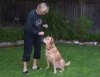
Waiting for his reward

Why I love watching Victoria Stillwell train dogs on “It’s Me or the Dog”

I am not a professional dog trainer or an animal behaviorist and I don’t even have a television. So, why would I write about Victoria Stilwell and her inspirational dog training methods on “It’s Me or the Dog”? Because when the producers of the show contacted me for permission to play the music of Through a Dog’s Ear on the show, I wanted to make sure she used dog training skills that I supported. It only took three short online video segments before I completely fell in love with her training style and now regularly watch her show to help expand my dog handling skills, and more importantly, improve my relationship with Sanchez, my yellow Lab.


Top 10 reasons I love Victoria Stilwell’s training methods:

10. She loves dogs and turns training into play and fun, hence making it enjoyable and stress free for the dog and the humans involved.


Advocacy Overdrive - Vick – Fair Shake or Shake Down?


Pages

Subscribe to The Dog Blog
Are you a dog trainer? Sign up for the Professional Dog Trainer Program – Free on Dunbar Academy