









User warning: The following module is missing from the file system: recaptcha. For information about how to fix this, see the documentation page. in _drupal_trigger_error_with_delayed_logging() (line 1184 of includes/bootstrap.inc).
The Essential Puppy Training Course is HERE!
We are thrilled to announce the release of our all-new Essential Puppy Training Course.
We've been hard at work developing this course for the past year and are extremely excited about it. So to
Resolving Dog-Dog Reactivity
FOR A LIMITED TIME Watch the all-new Dunbar Academy Dog-Dog Reactivity webinar for FREE, where Dr. Ian Dunbar explains the common causes of reactivity and how to resolve reactivity using 10 easy and...
Dominance and Dogs: Who is the Boss?
Dogs often act as connectors in society. Upon sharing your life with a dog, you may find yourself talking to more people when you’re out and about at the dog park, cafes, etc, or you may even...
Help Every Puppy Get the Education They Deserve
Please, please, PLEASE help us make sure every new puppy gets the education they desperately need and deserve this holiday season.
Please tell everyone you know about our 2 free puppy training...
Puppies and Shelter Dogs: Two Sides of the Same Coin
I am a dog trainer and I lead a double life. Of sorts. Behaviorally speaking. I am the Director of SIRIUS Puppy Training, a San Francisco Bay Area puppy training school. Our mission is to teach new...
The 2 Most Common Mistakes Dog Owners Make (and How to Fix Them)
There are a couple of mistakes that dog owners frequently make which are simple to fix and have the potential to dramatically improve a dog's behavior. These mistakes are a common cause of dog
Imagine you’re an 88-year-old grandmother with a live-in caretaker. One day your children decide it would be a great idea for a toddler to come and live with you. Your peaceful world is suddenly turned upside down. The noise! The chaos! The constant bids for attention from the rambunctious tyke! What’s happened?
What’s happened is exactly what happens to many older dogs when their owners decide to bring home a puppy. Sometimes owners feel the tincture of youth will infuse the senior dog with a new lust for life. Others simply can’t stand the thought of losing their older dog and the house becoming deafeningly silent, and feel a puppy would ease the transition. And sometimes owners (or more often, their children) want a puppy, and don’t consider the impact it might have on the original four-footed resident.
A typical training call might go like this:
"We’d like some help with our new four-month-old terrier puppy.”
Let's face it, we've all seen that handler. The one with lead gloves, granite feet, and the timing of Hunter S. Thompson at 5:00AM on January 1st, 1971. Don't you just wish you could give them a remote control? Well, wish no more!
This is the time of year when trainers are answering a lot of questions about how to manage dogs during holiday festivities. My answers to those questions depend a lot on the age, experience and personality of the dog.
Puppies (birth – 5 months): By all means use this time of year to socialize your pup! All of your holiday guests should be handling the pup, giving her treats, practicing sits & downs and saying the puppy’s name. It’s especially important to give the pup plenty of positive exposure to children, but it MUST be supervised in order to protect the puppy. It’s also important to remember that the pup will need constant supervision to maintain house training habits and will also need frequent crate breaks with a nice chewy to avoid over-arousal.
What does pack leadership mean for pet dog training? How do you ensure that you are leading your dog, not following them? What does it mean to be a good leader for your dog? The Dunbars talk about the many misconceptions about leadership that run rampant in the dog training world. As the leader, it's up to you to set the rules your dog should follow.
This is a great skill to teach all dogs. You can teach it in many different ways; In this blog I discuss one way to start this very useful exercise which you can progress as shown in the Vlog below.
1. At the start set your dog up to succeed. I would suggest that you start at a time when your dog is not excited and already relatively calm.
2. I would also start with a leash on your dog, which I suggest you place under my foot, giving the dog about 2/3 foot of leash. This will also becomes a cue for your dog to settle and relax, so when you are out and about with your dog and need him to settle you can just drop the leash and step on it, this should cue your dog to chill.
3. Once the dog starts to relax you can drop a treat for them or provide the with an pre-stuffed chew toy.
This is part of a training session with Cody, where we are working on practicing a settle from play. This is a great skill to teach all dogs. You can teach it in many different ways; In the blog above I discuss one way to start this very useful exercise.
What does pack leadership mean for pet dog training? How do you ensure that you are leading your dog, not following them? What does it mean to be a good leader for your dog? The Dunbars talk about the many misconceptions about leadership that run rampant in the dog training world. As the leader, it’s up to you to set the rules your dog should follow.
The near blizzard of earlier this week forced a slow down, bringing to the surface with an ice cold punch the kind of awareness weather can have on limiting outdoor time for some of us in humid continental climates. Yet the active mind of the canine who might not be getting as much outdoor walking or frolicking when the bitter cold stings still needs challenging -- even in the well behaved pair that inhabit my abode peacefully since Bosco found his new home last week.
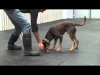
This video takes a look at a slightly different approach to teaching your dog or puppy to drop something out of their mouth compared to the traditional swapping approach. Using a more classical conditioning based approach I believe you can get very effective results as I demonstrate with my Kelpie, Cody.
You may have another variation or preference, love to hear more ideas on teaching this behaviour.