


Error message

User warning: The following module is missing from the file system: recaptcha. For information about how to fix this, see the documentation page. in _drupal_trigger_error_with_delayed_logging() (line 1184 of includes/bootstrap.inc).

Getting a Puppy Over the Holidays

The holidays can be a wonderful time to add a puppy or dog to your family, but the holidays also present plenty of challenges. With a little preparation and thought you can get a holiday puppy and

The 2 Most Common Mistakes Dog Owners Make (and How to Fix Them)

There are a couple of mistakes that dog owners frequently make which are simple to fix and have the potential to dramatically improve a dog's behavior. These mistakes are a common cause of dog

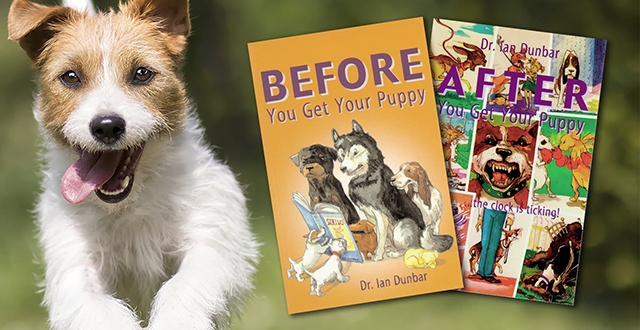
Help Every Puppy Get the Education They Deserve

Please, please, PLEASE help us make sure every new puppy gets the education they desperately need and deserve this holiday season.  Please tell everyone you know about our 2 free puppy training...

Resolving Dog-Dog Reactivity

FOR A LIMITED TIME Watch the all-new Dunbar Academy Dog-Dog Reactivity webinar for FREE, where Dr. Ian Dunbar explains the common causes of reactivity and how to resolve reactivity using 10 easy and...

All Puppies Deserve a FIRST Chance — an EDUCATION!

Owners and their new puppies are still getting the short end of the stick. Dog problems are invariably blamed on “irresponsible dog owners” BUT they are simply at a loss for what to do, and, no...

Puppies and Shelter Dogs: Two Sides of the Same Coin

I am a dog trainer and I lead a double life. Of sorts. Behaviorally speaking. I am the Director of SIRIUS Puppy Training, a San Francisco Bay Area puppy training school. Our mission is to teach new...

Alfresco Dining

Tip 1

First of all you will need to know if your dog likes ice, because if he doesn’t then maybe this tip won’t be such fun for your pet.


Emergency Preparedness

Most of us never think about what to do in an emergency until it happens. Some people put “grab it and run” kits together that contain passports and other important paperwork, as well as items of sentimental value. But what about emergency preparedness for our pets?

 
Mastiff_Big_Bone_copy.png

Food Critics

Nearly every trained animal you see in films and on television has been taught using food lures and rewards. Killer whales are trained using fish. Grizzly bears are trained using marshmallows and soda pop. Obviously, trainers dealing with such large, potentially dangerous animals do not want killer whales and grizzly bears forming negative associations with training, or with the trainer! Let's not discriminate against the canine species. Isn't it long overdue for our best friends to have equal opportunity with the rest of the trained-animal kingdom?

Any criticism of using food as a training tool may actually be applied to the use of any training tool, including leash-corrections and praise.

 
Training:  Food Critics
GirlTeachingSit.png

Basic Lure/Reward Training

All you need to train your puppy is the inclination, a few sparks in your brain, a couple of pieces of kibble in your hand, and...the puppy. So, enough said — let's get going. Ask your pup whether it is ready to proceed by moving a food lure up and down in front of his nose. If your puppy nods in agreement, you're off and running.

 
Training:  Lure/Reward Training
Claude_Head.png

Ch 5: Adult Dog Training (2 years+)

As dogs mature, they develop many doggy interests that may compete with dog training. For example, dogs may find that sniffing the grass, playing with other dogs and chasing squirrels are all much more exciting than listening to their owners and following repetitive instructions — come, sit, down, heel, sit, heel, sit, etc. Puppy training techniques begin to fail, environmental stimulation causes sensory overload and many dogs become hyperactive or reactive to other dogs and people. Owners become frustrated by the dog’s hyperactivity and inattentiveness and the relationship starts to go downhill.

 
Training:  Adult Dog Training

Ch 4: Adolescent Dog Training (18 weeks - 2 years)

By now you're probably quite exhausted by your puppy-raising efforts. Hopefully, though, you are justifiably proud of your well-mannered, well-behaved, highly socialized dog with dependable bite inhibition. However...

Adolescence is a time of change.

To ensure that your attentive, mannerly and friendly puppy remains attentive, mannerly and friendly throughout adulthood, you need to accelerate socialization and training. Do not take your puppy’s stellar qualities for granted. Make a point always to praise your dog when he acts appropriately and to reward him whenever he is exceptionally well behaved.

 
615_dog_park_3.png

Training in the Dog Park

Letting your dog play uninterrupted in the park can be one of the quickest ways to lose control over your adolescent dog. Allow him to play uninterrupted and you'll quickly lose his attention and have no control over him whatsoever. On the other hand, if you integrate training and play, you'll soon develop reliable, off-leash distance control over your dog.

How to Train Your Dog Not to Come When Called

 
Training:  Training in the Park
645_CarDogs.png

Training in the Car

Don't forget to practice in the car. It's the same technique as on the walk. For a couple of days, read the newspaper in the car, having instructed your dog to settle down with a stuffed Kong. Have a short training interlude every minute or so to practice some body-position changes —sit, down, stand, etc. —or place changes — back seat, front seat, seat belt, crate, etc. It is much easier to do this when you are not driving and the car is stationary. Once your dog promptly responds to each request, repeat the exercises with a friend driving. You'll soon find your dog happily responds to your requests when you are driving. Once you have a dog that will settle down anytime, anywhere — in the car and on walks — it's time to get him out and about. Be sure to take a bag of kibble with you. Take your dog everywhere — on errands around town, to the bank, pet store, Granny's, to visit friends, to explore the neighborhood, or maybe just for the ride.

 
Training:  Training in the Car
630_K2Cav_Pee1.jpg

Training on the Dog Walk

As soon as it is safe for your puppy to go out, take him on walks — lots of them. There is no better overall socialization exercise and no better overall training exercise. As an added benefit, dog walks are good for your health, heart, and soul. Walk that dog! Tie a pink bow to his collar and see how many smiles you get and how many new friends you make. Doggy socialization is good for your social life.

Housetraining on Walks

If you do not have a private yard or garden, make sure your dog urinates and defecates before you begin your walk. Thus, the walk becomes a reward for doing the right thing in the right place at the right time. Otherwise, when you terminate an enjoyable walk after your dog has done her duty, you end up punishing her for eliminating. Your dog might then start delaying elimination to prolong his walks.

 
Training:  Training on Walks
620_Monte_Hammock.png

Lifestyle Training

If you want your puppy to obey each family member in all settings and situations, then every member of the family must train the pup in every setting and situation. In order to teach your puppy to respond here, there, and everywhere, it needs to be trained here, there, and everywhere. The secret is to train your puppy little but often — at least fifty tiny training sessions a day — with only a couple of sessions lasting for more than a few seconds.

Integrate Training and Games

Playing games with lots of rules is a fun way to train your dog and exercise her mind. Your puppy will learn that games have rules and that rules are fun. Training becomes a game, and games become training.

Integrate Training and Lifestyle

 
Training:  Lifestyle Training

Pages

Subscribe to Front page feed
The Behavior Problems Crash Course. Free on Dunbar Academy