


User warning: The following module is missing from the file system: recaptcha. For information about how to fix this, see the documentation page. in _drupal_trigger_error_with_delayed_logging() (line 1184 of includes/bootstrap.inc).
Help Every Puppy Get the Education They Deserve
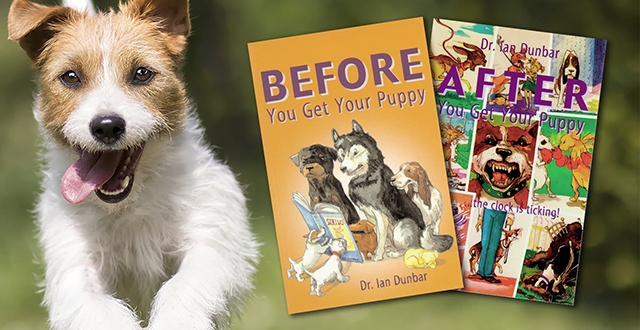
Please, please, PLEASE help us make sure every new puppy gets the education they desperately need and deserve this holiday season.
Please tell everyone you know about our 2 free puppy training...
The 2 Most Common Mistakes Dog Owners Make (and How to Fix Them)
There are a couple of mistakes that dog owners frequently make which are simple to fix and have the potential to dramatically improve a dog's behavior. These mistakes are a common cause of dog
All Puppies Deserve a FIRST Chance — an EDUCATION!
Owners and their new puppies are still getting the short end of the stick. Dog problems are invariably blamed on “irresponsible dog owners” BUT they are simply at a loss for what to do, and, no...
Dominance and Dogs: Who is the Boss?
Dogs often act as connectors in society. Upon sharing your life with a dog, you may find yourself talking to more people when you’re out and about at the dog park, cafes, etc, or you may even...
The Essential Puppy Training Course is HERE!
We are thrilled to announce the release of our all-new Essential Puppy Training Course.
We've been hard at work developing this course for the past year and are extremely excited about it. So to
Puppies and Shelter Dogs: Two Sides of the Same Coin
I am a dog trainer and I lead a double life. Of sorts. Behaviorally speaking. I am the Director of SIRIUS Puppy Training, a San Francisco Bay Area puppy training school. Our mission is to teach new...
The British are known as being a rather reserved bunch. We like tea and roast beef. We enjoy reading the newspapers on Sunday and moaning about the weather. We applaud stiff upper lips and not making a fuss. We love our dogs, and we regard them as important family members. Mostly though, we like them to cause us minimum embarrassment in social circles. In practice, this means saying hello politely to other dogs in the park, playing nicely when we have time (but not if we don’t) and being calm and sensible when visitors arrive at the house. Without wishing to make it sound as if we are all suffering from some form of insidious national neurosis, being British means enjoying a semblance of gentle control.
“In man, social intercourse has centered mainly on the process of absorbing fluid into the organism, but in the domestic dog and to a lesser extent among all wild canine species, the act charged with most social significance is the excretion of fluid. For man the pub, the estaminet, the Biergarten, but for the dog the tree trunk, the lintel of door or gate, and above all the lamppost, form the focal points of community life. For a man, the flavors of alcoholic drinks, but for a dog the infinitely variegated smells of urine are the most potent stimuli for the gregarious impulse.” From The Lamppost, A Study of the Social Life of the Domestic Dog by Sirius (quoted in Sirius by Olaf Stapledon)
Humans communicate largely by the spoken and written word. (Hence this book.) Dogs, however, employ several different “languages”
Dog Play Puppies and play are virtually synonymous. The very thought of a group of young puppies conjures up a picture of virtually non-stop, fun-loving, boisterous and bumbling play sessions. In fact young pups spend over 90% of their waking hours playing. But aside from the fun-factor, puppy play is also serious business. Play has many important functions. Puppies spend most of their play sessions practicing all-important hunting, fighting and survival skills. At four- to five-weeks-of-age, puppy play is characterized by puppies bumbling around, bumping into each other with frequent and amusing, bungled ambush attempts. But by eight weeks, most pups have become good little hunter-fighters and are quite adept and stalking, chasing and pouncing on their littermates.
The Alpha Fallacy It is popularly held that rank is established and maintained by physical strength and dominance and that the more dominant (i.e., higher ranking) dogs are more aggressive. Hence, dogs that frequently threaten, growl, fight and bite are often assumed to be “alpha” animals. Not so Joe! The above assumptions are quite awry. Not only do they betray a theoretically simplistic view of a most sophisticated social structure but also, such notions tend to be counterproductive, inhumane and dangerous when cavalierly extrapolated to dog training, or the treatment of behavior problems.
Four Steps to an Emergency Distance Sit With a little practice you can develop and absolutely rock-solid, long-distance, sit-stay that can save you from most dangerous or embarrassing situations your dog could get into. The secret to off-leash control is to thoroughly integrate fun training into all of your dog's off-leash activities. Total integration of training and play should be your aim from the very start. Interrupt your dog's off-leash activities every minute or so. Every time you interrupt an enjoyable activity by instructing your dog to sit, for example, and then allow him to resume the activity, you are reinforcing the dog's prompt sit with a powerful reward. The more you interrupt your dog's play, the more you may reward him for sitting promptly.
Stay Once your puppy changes body positions quickly and eagerly on request, delay rewarding your pup for a couple of seconds after each position change. Quietly praise your pup while he remains (stays) in the appropriate position. In fact, count out the seconds, "Good sit-stay one... good sit-stay two... good sit-stay three... etc."
Quantum Leaps You will make four quantum leaps in training as you phase out hand-held training lures, and eventually all training rewards. Phasing out food lures is a simple matter — just put them in your pocket to be used as rewards for above-average responses. Phasing out food rewards is similarly simple — just empty your pockets of food and use something else as a reward.
Sit 1. Say "Joe Pup, Sit." 2. Keeping the lure close to your puppy's nose, slowly move it upwards and backwards over the pup's muzzle towards his eyes. As your pup lifts his nose to follow the treat, he will sit down. (Do not lift your hand too high or your puppy will jump up.) 3. As soon as your puppy sits, say "Good little doggie!" and offer a piece of kibble as a reward.
The fantasy of the image, versus the reality of the situation can be hard for some new puppy parents to handle. Having full knowledge of the situation can be a freeing feeling. Knowing that many others share your puppy experience is comforting.