


User warning: The following module is missing from the file system: recaptcha. For information about how to fix this, see the documentation page. in _drupal_trigger_error_with_delayed_logging() (line 1184 of includes/bootstrap.inc).
Puppies and Shelter Dogs: Two Sides of the Same Coin
I am a dog trainer and I lead a double life. Of sorts. Behaviorally speaking. I am the Director of SIRIUS Puppy Training, a San Francisco Bay Area puppy training school. Our mission is to teach new...
Dominance and Dogs: Who is the Boss?
Dogs often act as connectors in society. Upon sharing your life with a dog, you may find yourself talking to more people when you’re out and about at the dog park, cafes, etc, or you may even...
Resolving Dog-Dog Reactivity
FOR A LIMITED TIME Watch the all-new Dunbar Academy Dog-Dog Reactivity webinar for FREE, where Dr. Ian Dunbar explains the common causes of reactivity and how to resolve reactivity using 10 easy and...
The Essential Puppy Training Course is HERE!
We are thrilled to announce the release of our all-new Essential Puppy Training Course.
We've been hard at work developing this course for the past year and are extremely excited about it. So to
New Free Course – Six Simple Steps to Solve Your Dog's Behavior Problems
We've just published a new FREE course on Dunbar Academy called Six Simple Steps to Solve Your Dog's Behavior Problems.
This course is filled with short videos and downloadable documents that provide
All Puppies Deserve a FIRST Chance — an EDUCATION!
Owners and their new puppies are still getting the short end of the stick. Dog problems are invariably blamed on “irresponsible dog owners” BUT they are simply at a loss for what to do, and, no...
Training a dog is a life-long process. The key is finding a way to incorporate little training sessions into every part of daily life with your dog, using their favorite activities as rewards.
Letting the little dogs off-leash first gives them a chance to explore and get comfortable. Some pups are naturally shyer, and need more time to build up their confidence.
If you want your dog to come whenever you call, you have to practice in distracting environments. But if they don’t come, and you have to go get them, they don’t deserve a reward.
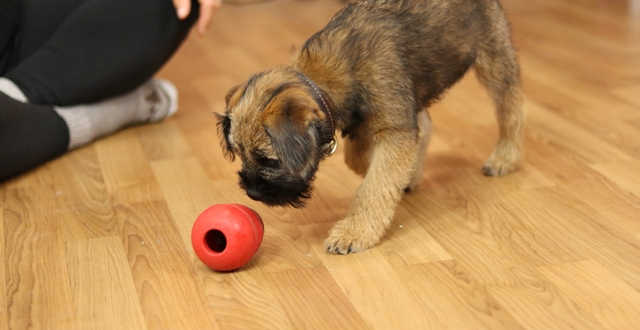
It’s very important that your puppy forms appropriate chewtoy habits as early as possible. Fortunately, this couldn’t be easier. Simply stuff a hollow chewtoy with some treats, and leave your puppy confined with it.
It’s important that your puppy is handled by strangers as well. The best part of puppy class is sitting in a circle passing them around and getting the chance to handle and praise each pup.
Practice your distance sits while your dog is roaming, sniffing, and not paying particular attention to you. If you’re in an unconfined place, you can practice with a very long leash.
Handling is such a simple exercise that people often neglect to do it often enough. The only way your adult dog will be happy being handled is if you trained them to enjoy it as a puppy.
Food treats make puppy training much easier. If your dog isn’t interested in your treats, stop feeding them from a bowl, and instead use their daily kibble for training. Just make sure you phase out the food once they understand the commands.
Children often have trouble telling a puppy “Off” in a way that really tells the dog that they’re behavior is unaccetable. Help your child understand that they need to yell loudly when the dog pulls on clothing or mouths them inappropriately.
Walking through a new environment can be very stressful for a dog, especially if there are other dogs or strangers around. Take time to settle down in unfamiliar places and reward your dog for acting calmly.